🇩🇪 Diesen Beitrag auf Deutsch lesen
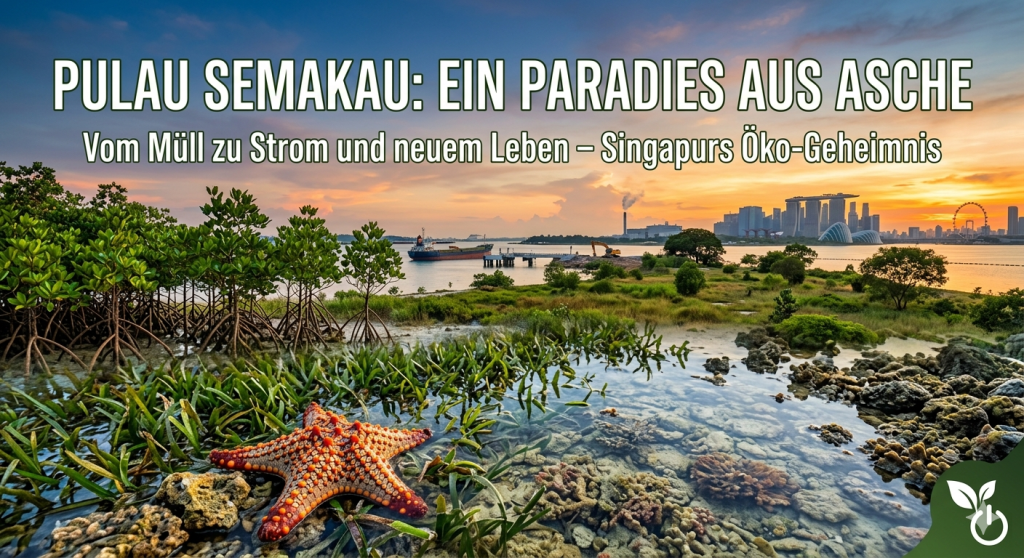
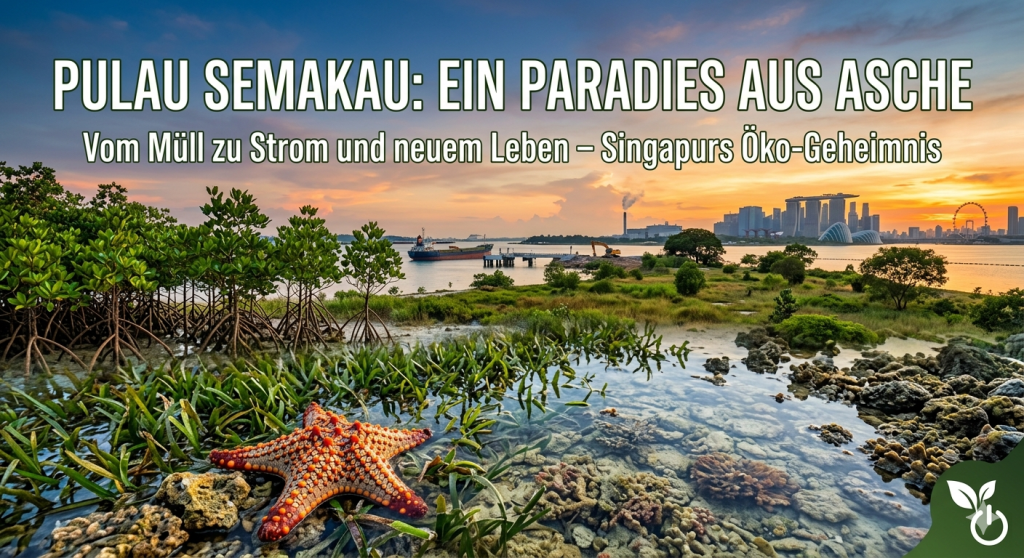
Imagine you are going on a trip to a tropical island. You expect palm trees, clear water, maybe a few colourful birds. What you don’t expect is that you are actually walking on the remains of millions of tonnes of burnt rubbish.
Welcome to Pulau Semakau, the world’s first offshore landfill built in the open sea. But forget everything you know about smelly rubbish dumps. Semakau is a place that amazes even hardened biologists. It is living proof that technology and nature can go hand in hand.
Making the impossible possible: How ash becomes land
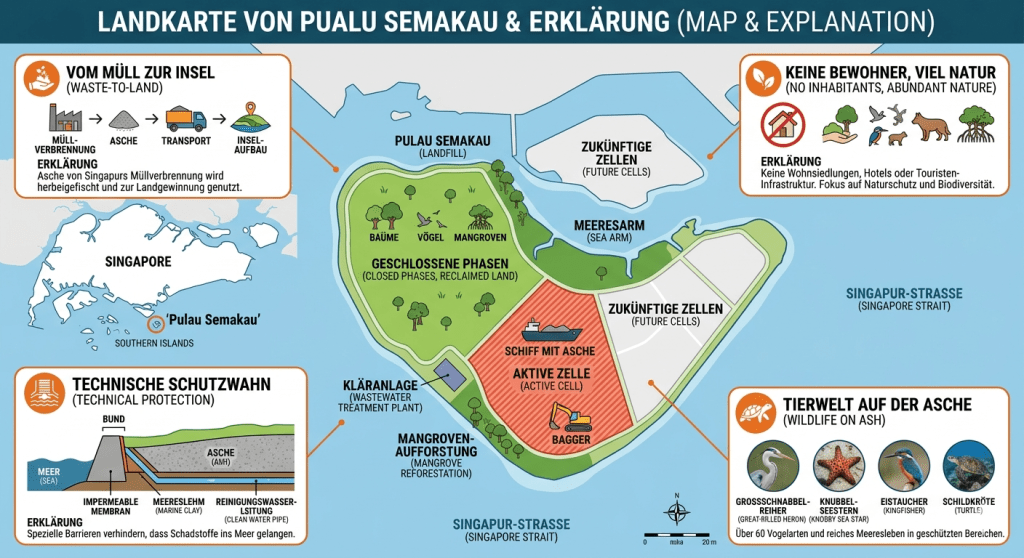
The concept is simple but brilliant: Singapore incinerates almost all of its non-recyclable waste. The resulting ash is shipped to Semakau. There it is filled into huge, watertight sealed cells. As soon as a cell is full, it is covered with soil – and voilà: new land is created.
The most amazing thing, however, happens after the diggers have gone. Because access is strictly limited and nobody lives there, nature has reclaimed the island with a force that nobody expected.
The animal residents of the “ash paradise”
If you visit Semakau (which is only possible on special guided eco-tours), you enter a world bursting with life. Here is an overview of the impressive species that call this surreal place home:
1. Rulers of the skies: A paradise for birdwatchers
More than 60 different bird species have been spotted on Semakau. The star of the island is the Great-billed Heron. Standing up to 1.15 metres tall, it is Singapore’s largest bird and has found a safe refuge here.
But keep your eyes open for these hunters too:
• White-bellied sea eagle: Majestic birds of prey that can often be seen fishing in the lagoons.
• Brahminy kite: Another striking bird of prey with brown plumage and a white head.
• Kingfishers: They dart across the water surface in bright colours.
2. Jewels of the intertidal zone: Life in the rhythm of the tides
Perhaps the biggest surprise awaits on the shores when the water recedes. The seagrass meadows and coral reefs around Semakau are incredibly healthy.
• The colourful giants: The knobbly sea star is the undisputed photo star – large, orange-red and covered in striking knobs. Sand stars are also common.
• Bizarre beauties: Photography fans look out for the tiny, incredibly colourful sea slugs (nudibranchs), which look like works of art.
• Exotic sea creatures: With a lot of luck you might even see a hawksbill turtle swimming in the clear waters. Playful otters have been spotted too.
• Crabs and crustaceans: The intertidal zones are teeming with life, from rock crabs to the impressive (but poisonous!) mosaic reef crab.
3. The untouched mangroves: Nursery of the sea
One key to Semakau’s biological success is its dense mangrove forests. Thousands of seedlings were planted to restore damaged areas. These forests are the “lungs” of the coast and serve as a safe nursery for countless fish species.
Conclusion: A miracle with a message
Pulau Semakau is more than just a landfill. It is an experiment that shows: if we give nature space and use technology wisely, we can create life even from our waste.
It is a place that teaches us how precious our environment is and how important it is to avoid waste – because even this paradise will be full by around 2035. Until then, it remains Singapore’s most astonishing secret.
Have you ever heard of a landfill that is this beautiful? Would you like to visit Semakau? Let me know in the comments! 👇


Hinterlasse einen Kommentar