
🇩🇪 Diesen Beitrag auf Deutsch lesen
Only two days left in Singapore, and we decided to dedicate this day to the city’s greatest architectural and technological masterpieces. From where we were staying in Hougang, we took the train straight to Gardens by the Bay to head for our first big destination: the Marina Barrage. The weather was at its most intense – it was extremely hot and the sun was beating down mercilessly from a cloudless sky.
The Marina Barrage: A technological marvel
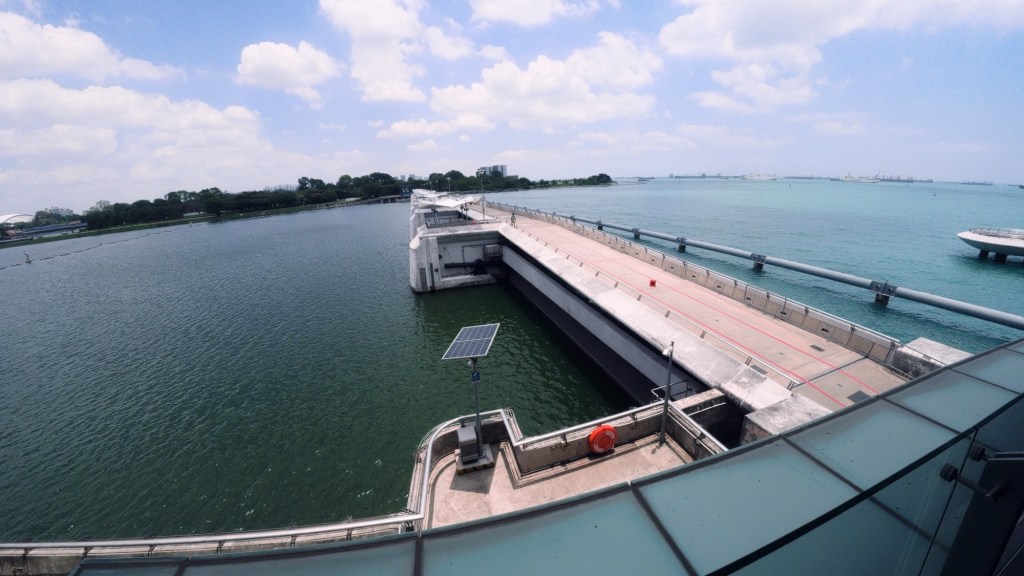
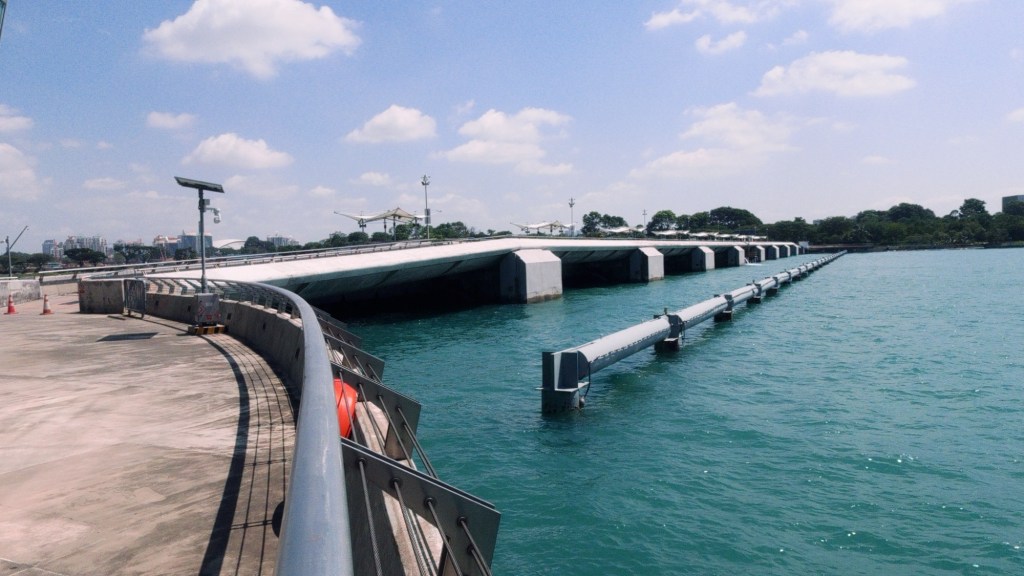
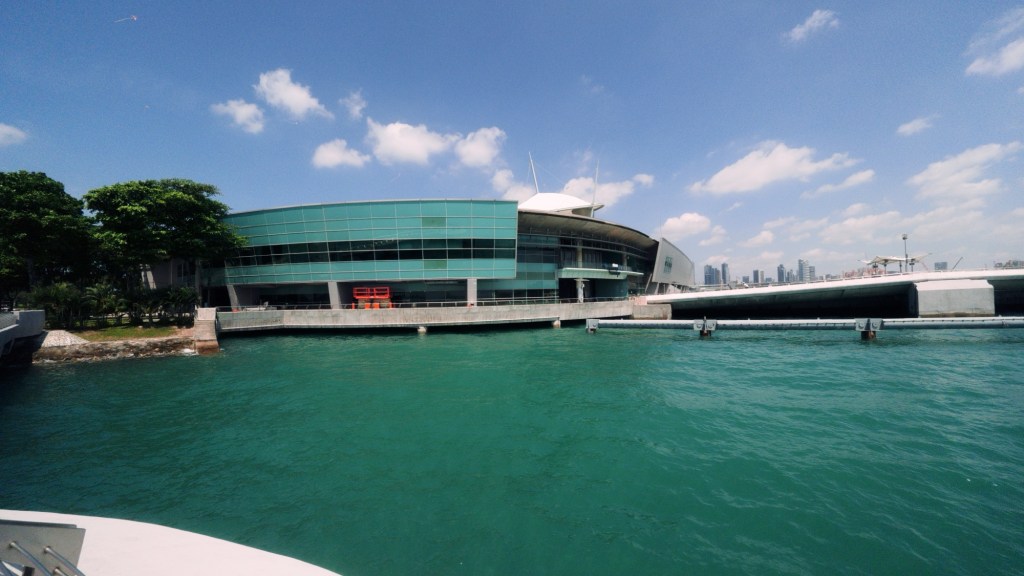
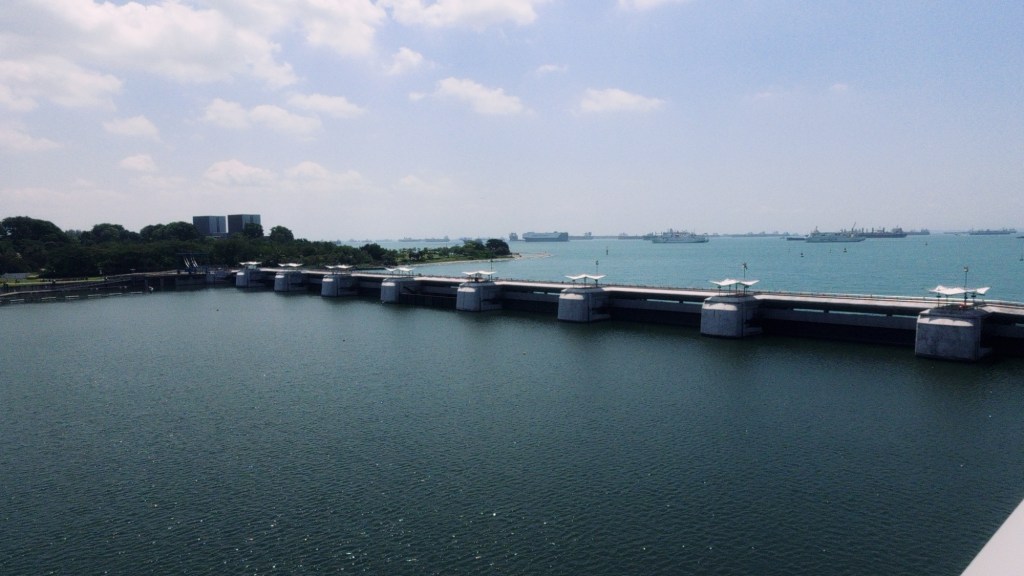
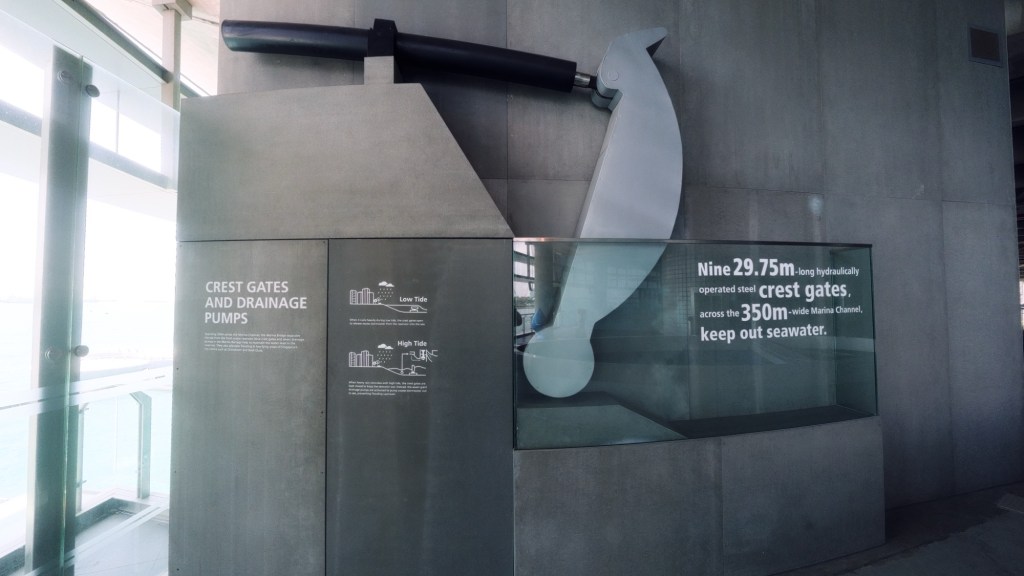
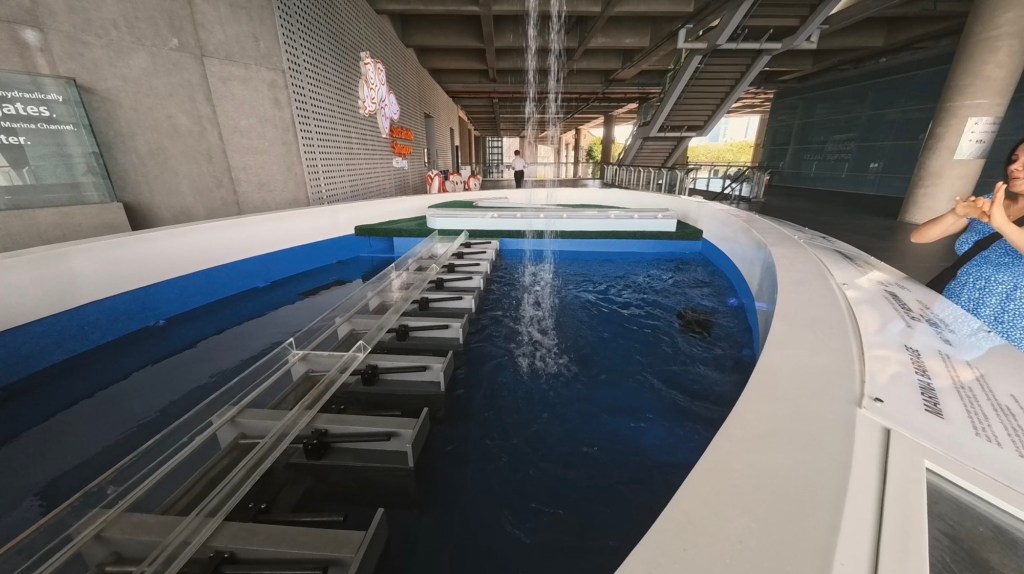
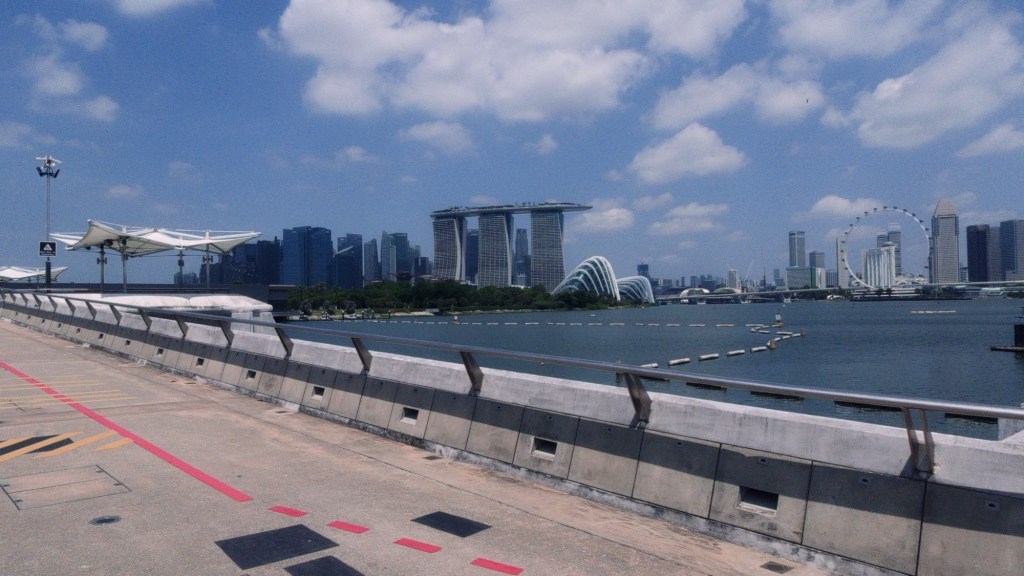
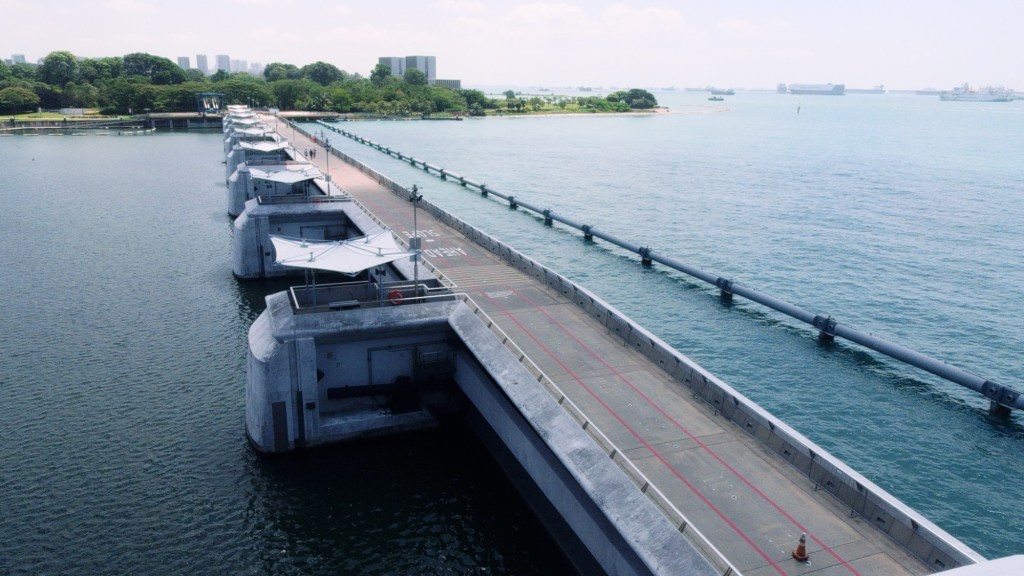
Standing in front of the Marina Barrage, at first glance you see an elegant 350-metre-long dam. But in reality, this is the beating heart of Singapore’s survival strategy. Engineers from all over the world should come here to see this masterpiece. The facility fulfils three vital functions at the same time:
1. Creating a freshwater reservoir
The dam completely seals off the Marina Channel from the open sea. When the structure was closed in 2008, the inner basin still contained pure seawater. Since Singapore is one of the rainiest countries on earth, the engineers used nature: rainwater from a huge catchment area of 10,000 hectares (one sixth of the entire island) gradually flushed the seawater out to sea while the gates were open. After just two years, in 2010, the desalination process was complete. Today the Marina Reservoir is Singapore’s fifteenth freshwater reservoir and covers a considerable part of the national drinking water demand.
2. The intelligent flood control system
The system protects low-lying districts such as Chinatown from flooding during tropical downpours. The facility decides completely autonomously based on the tides:
• The low-tide scenario: When the water level in the freshwater reservoir is higher than the sea, nine huge steel gates – the so-called “crest gates” – are lowered hydraulically. Each of these gates is 29.75 metres long (almost the size of a basketball court). The excess rainwater flows into the sea by gravity alone, without any energy.
• The high-tide scenario: When the sea outside is higher, the steel gates must stay closed so that no salt water gets into the drinking water. If it rains heavily at the same time, seven of the largest drainage pumps in the world are switched on. They push the water over the closed gates into the sea. The capacity is unimaginable: 280 cubic metres of water per second. That is enough to completely empty an Olympic swimming pool in just over a minute.
3. The colours of the water: Physics meets biology
A fascinating detail that catches your eye immediately is the visual contrast of the water. On the sea side, the water shines in a strong blue, while the still freshwater in the reservoir looks rather dark and greenish. This has to do with light: water itself mainly absorbs red light, while blue light is reflected back – that is why clear seawater looks blue, and the sky is reflected in it as well. In the calm freshwater of the reservoir, on the other hand, many tiny algae grow. Their green pigment (chlorophyll) absorbs blue and red light and reflects mainly green light. The huge steel gates of the Marina Barrage thus form a razor-sharp border between two completely different worlds of colour.
A look into the future: The Sustainable Singapore Gallery
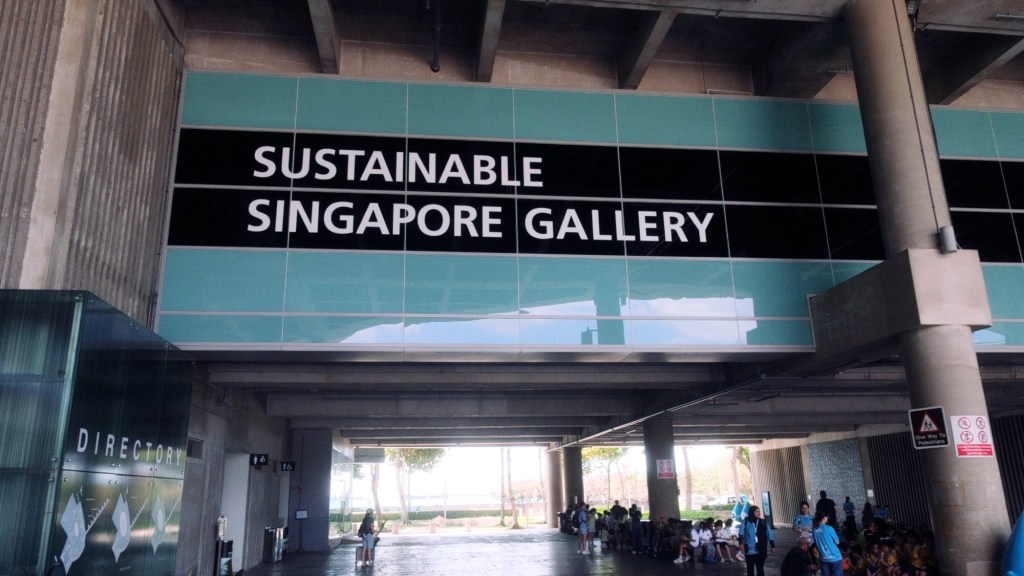
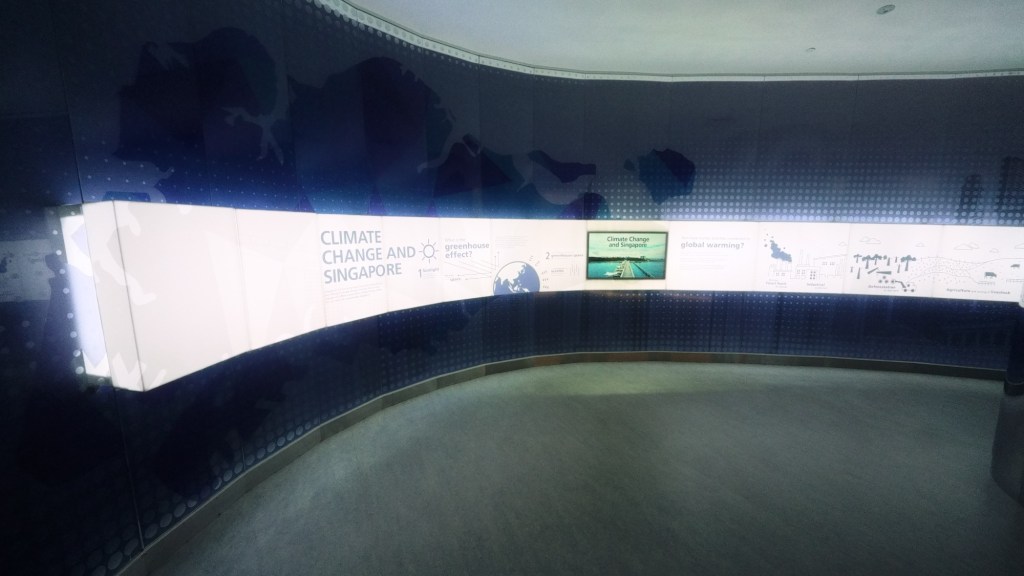
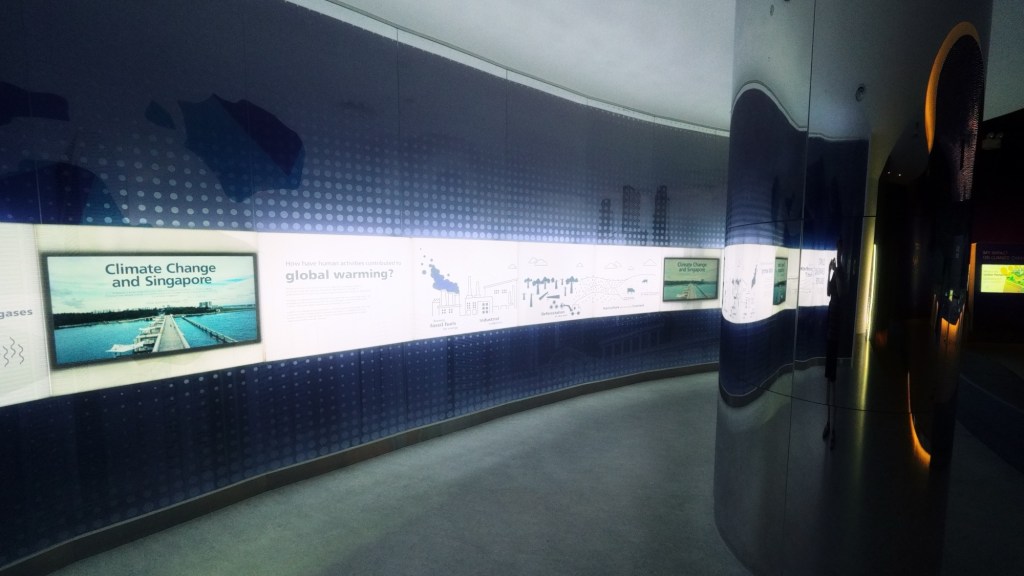
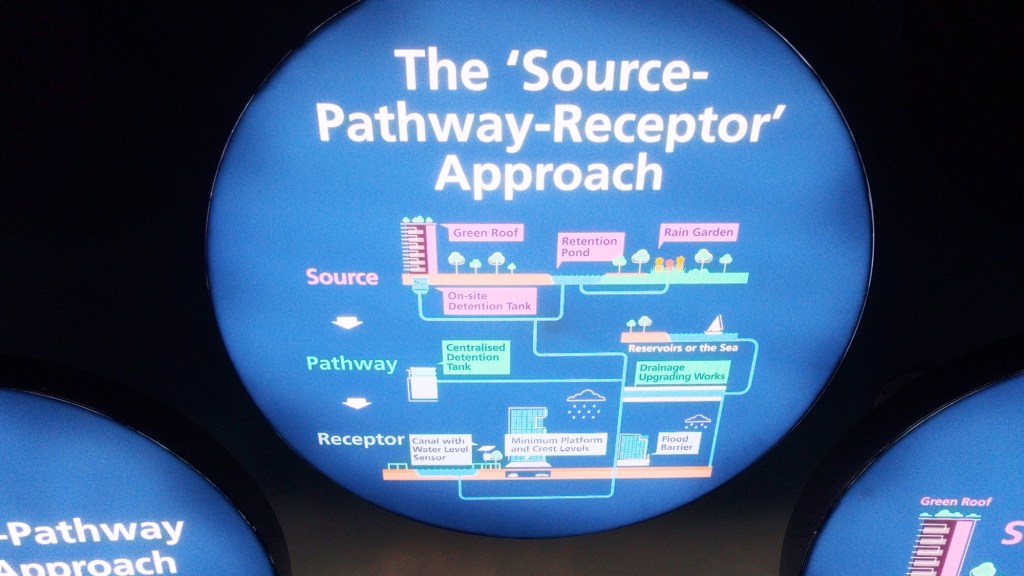
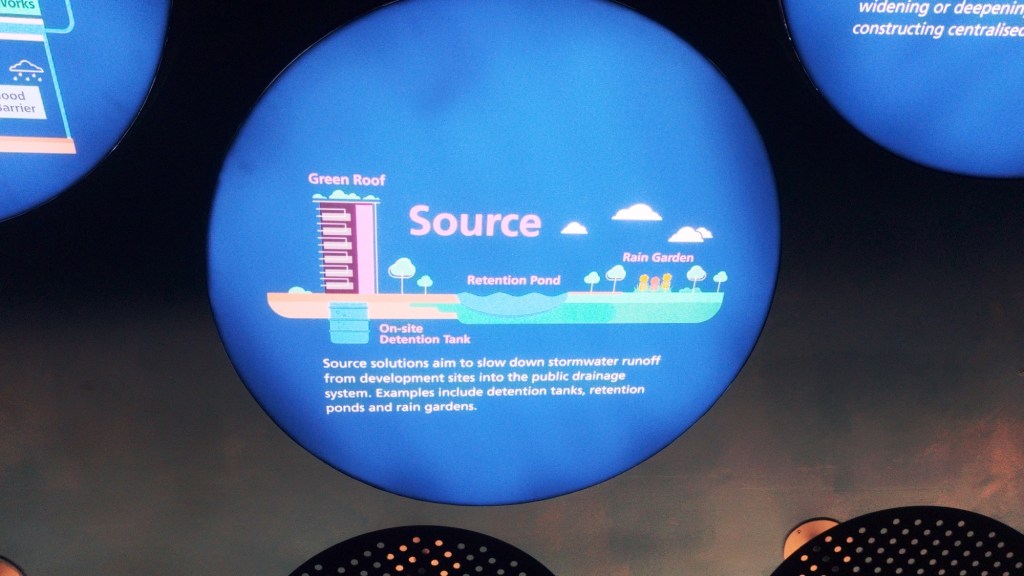
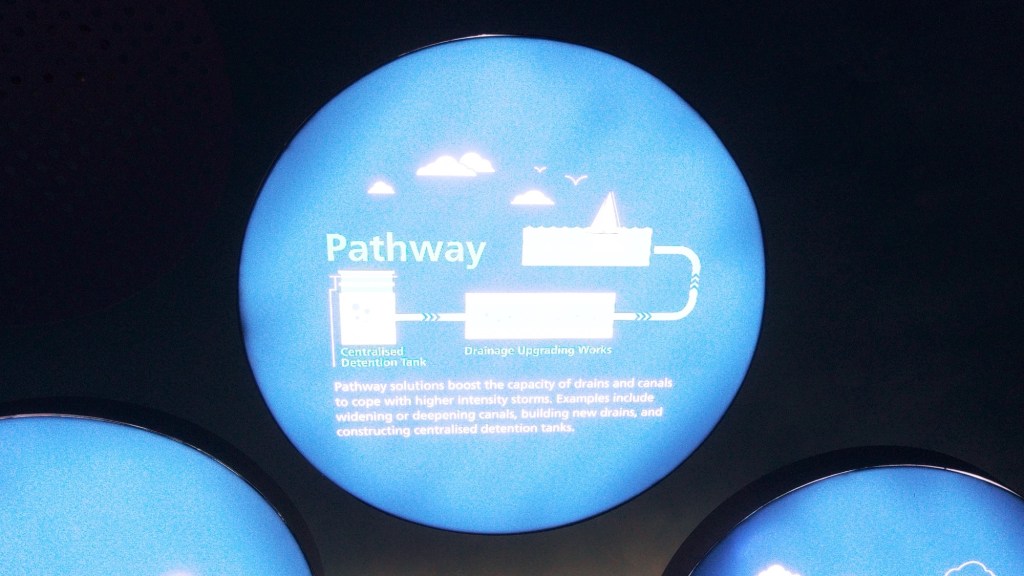
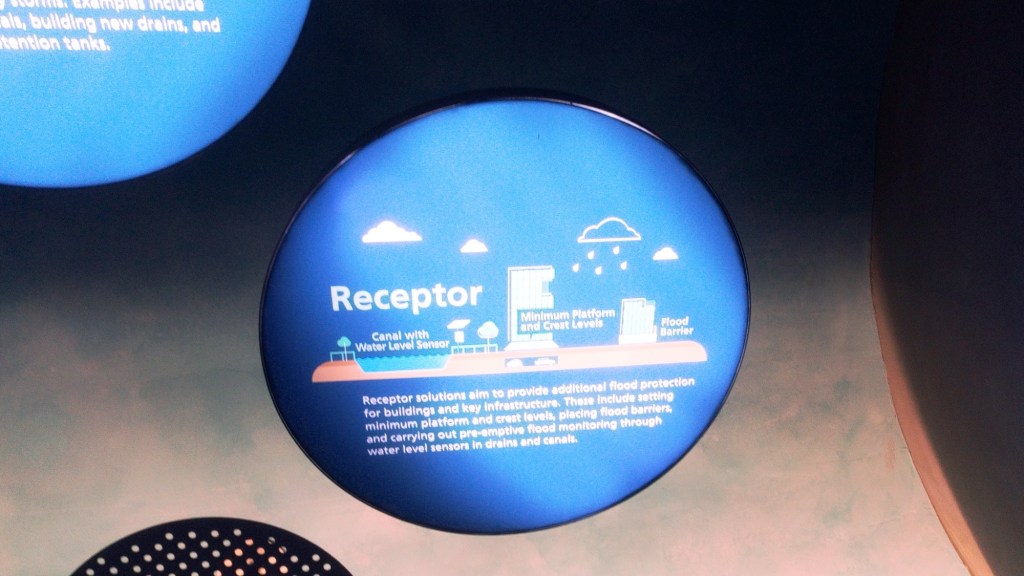
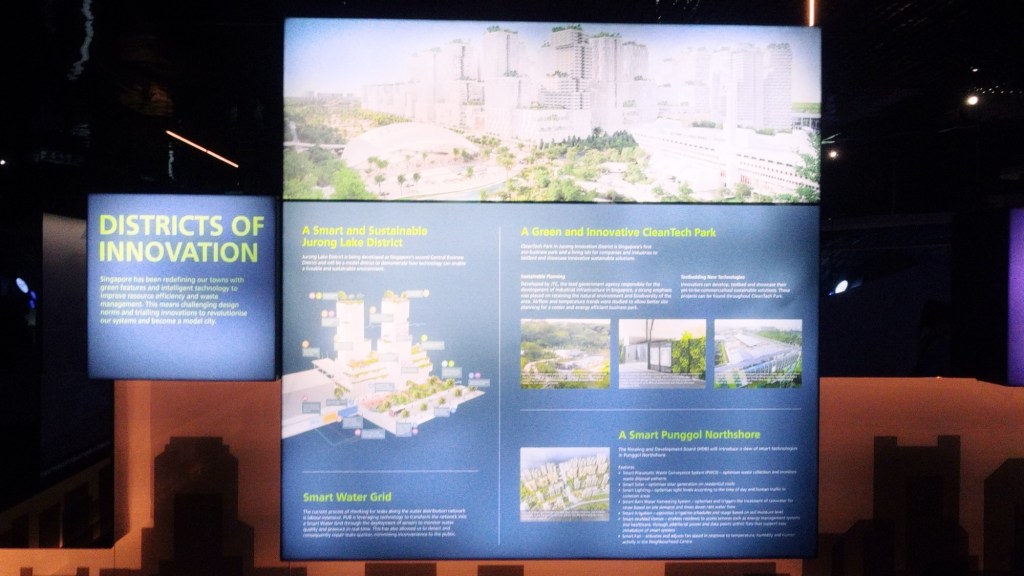
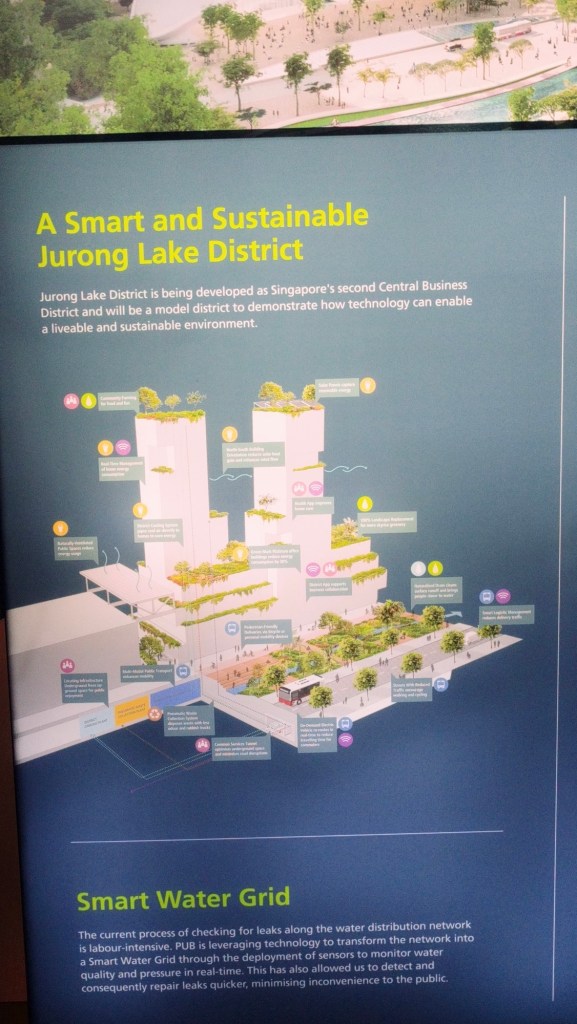
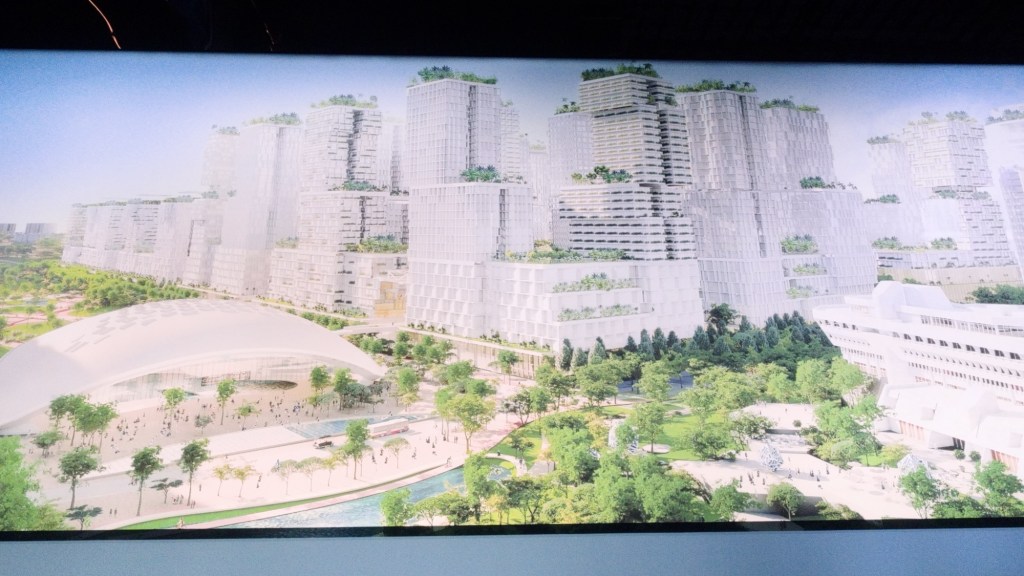
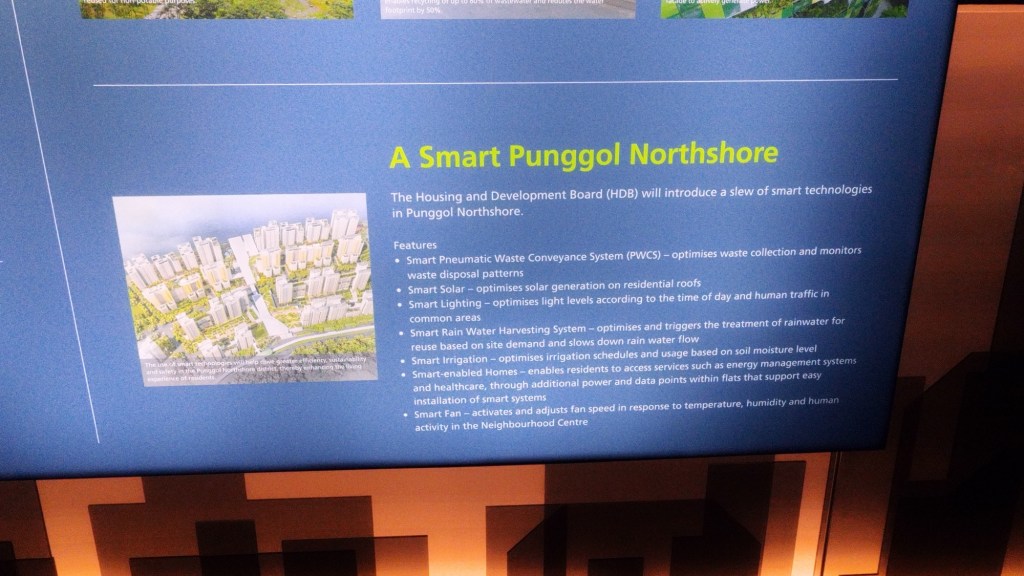
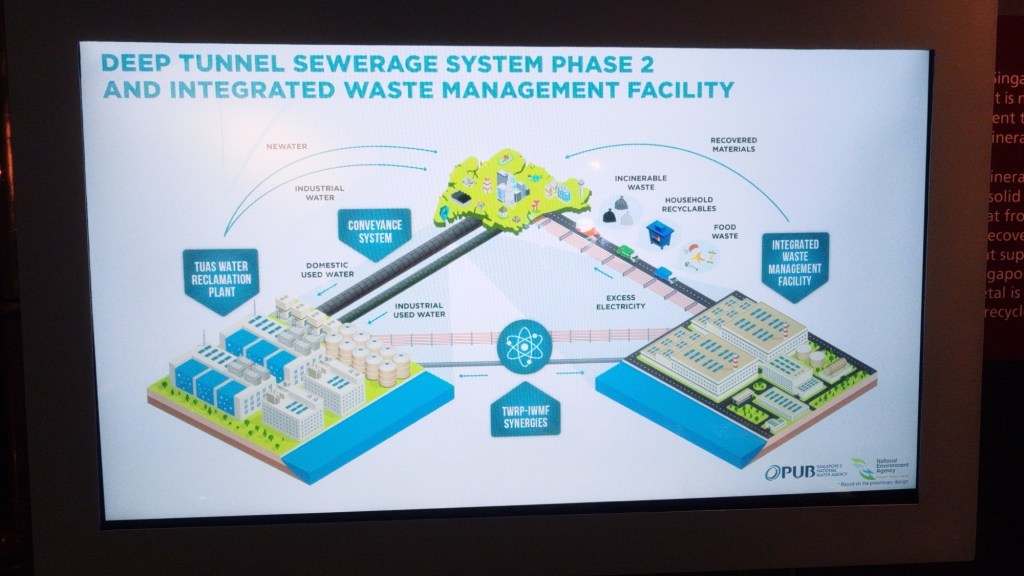
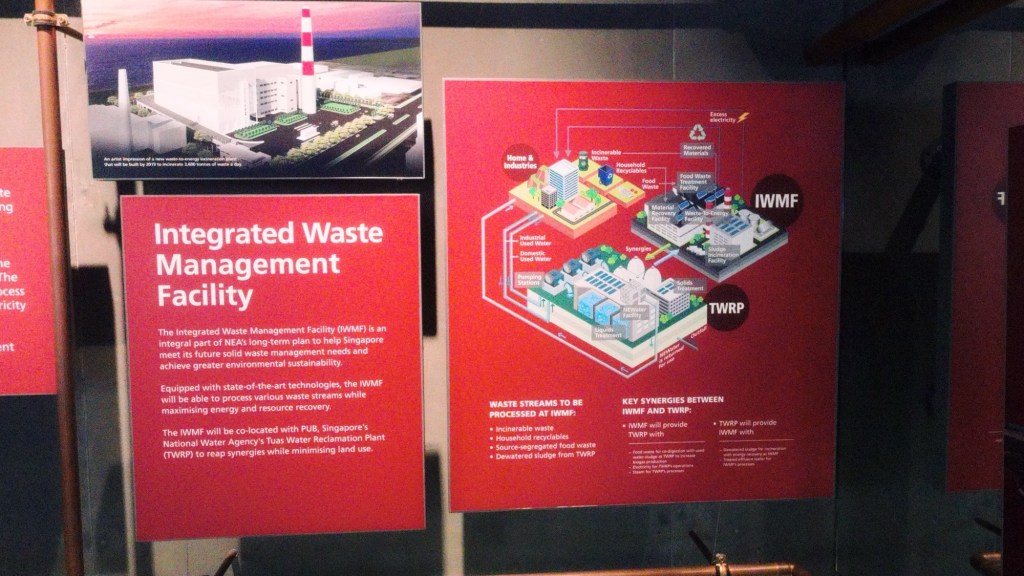
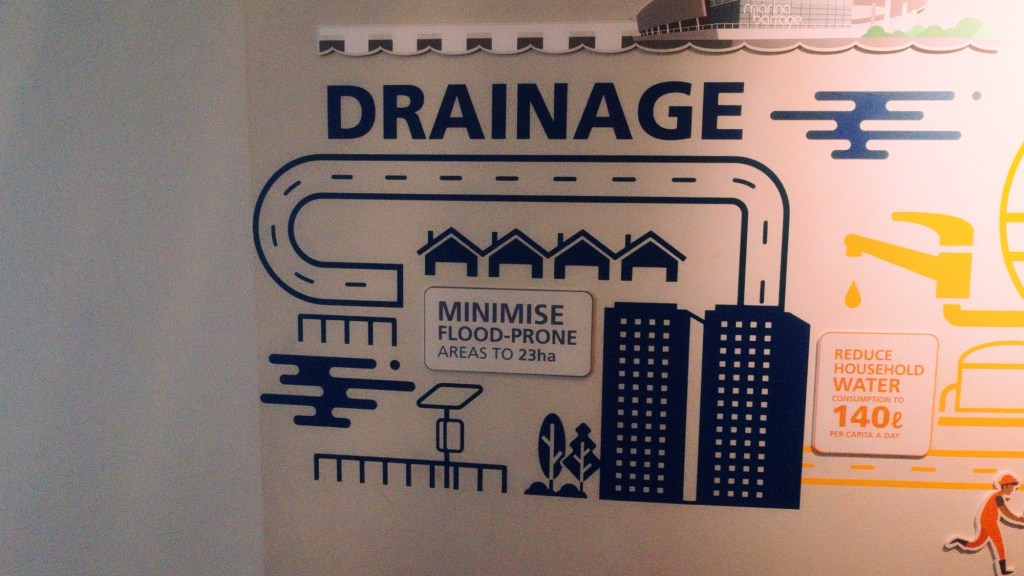
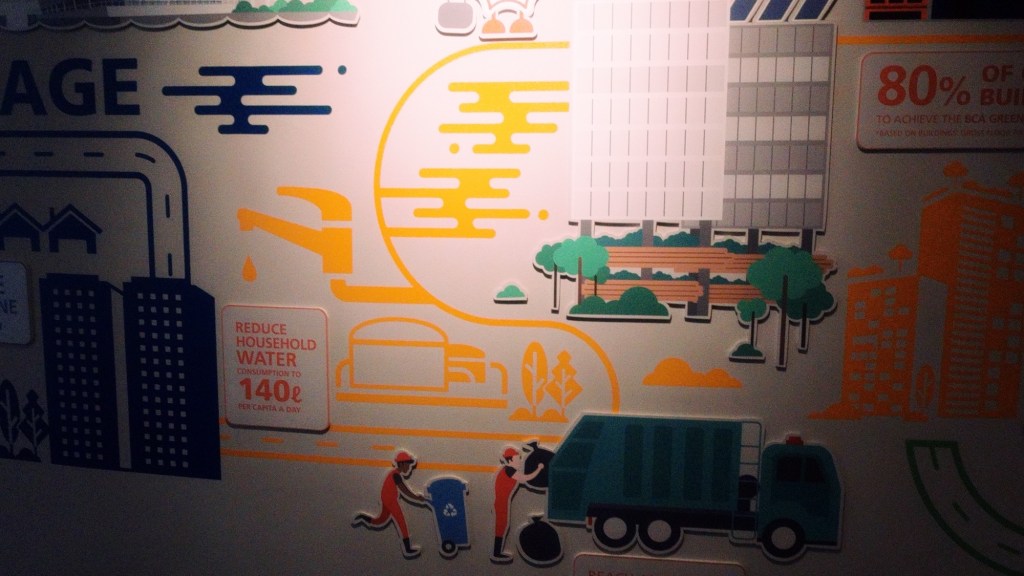
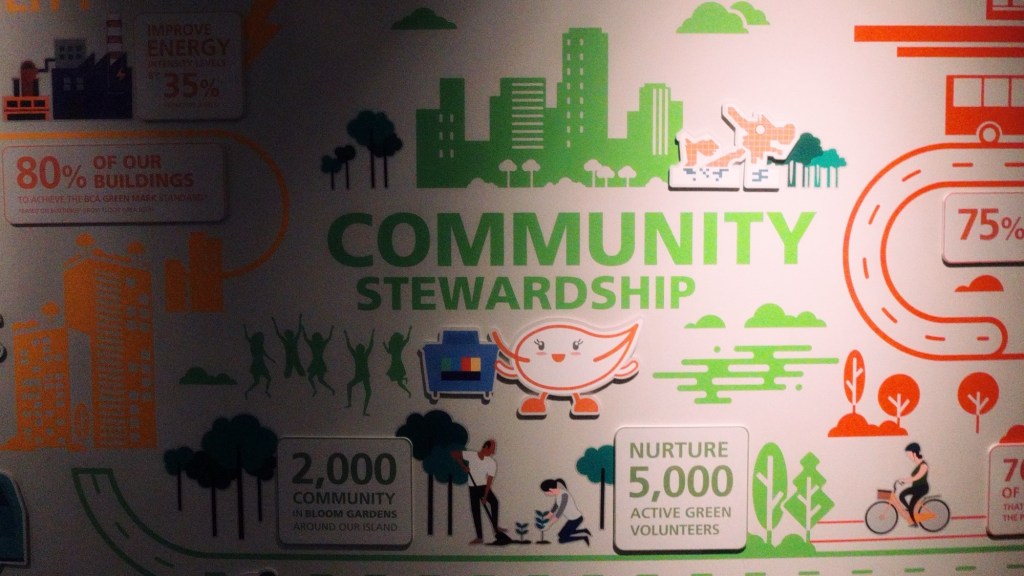
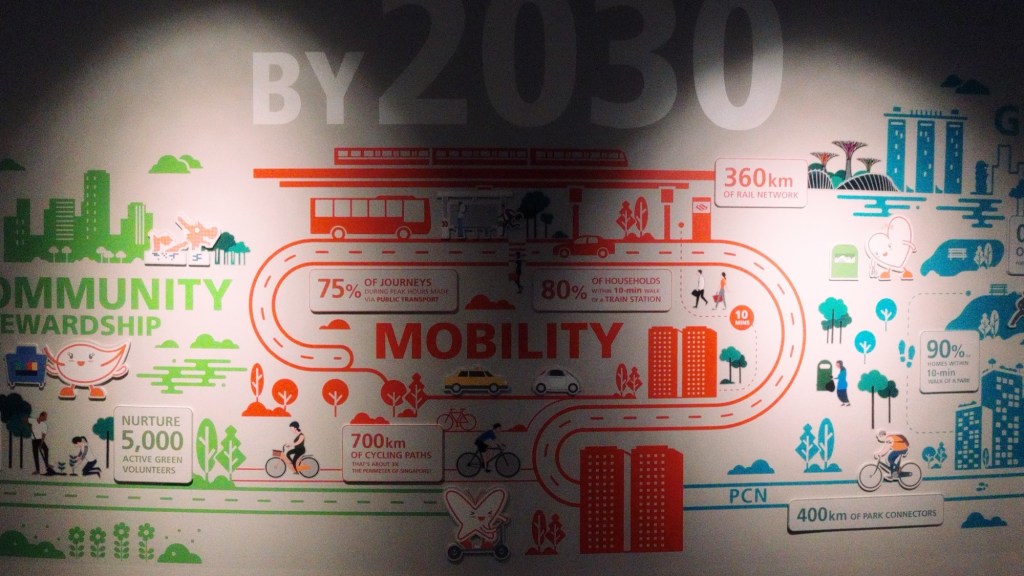
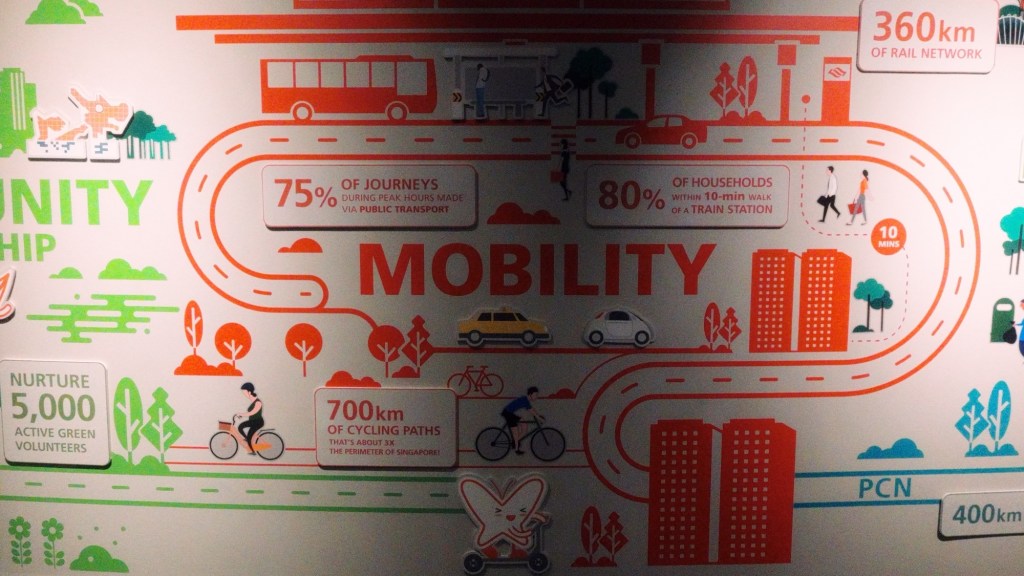
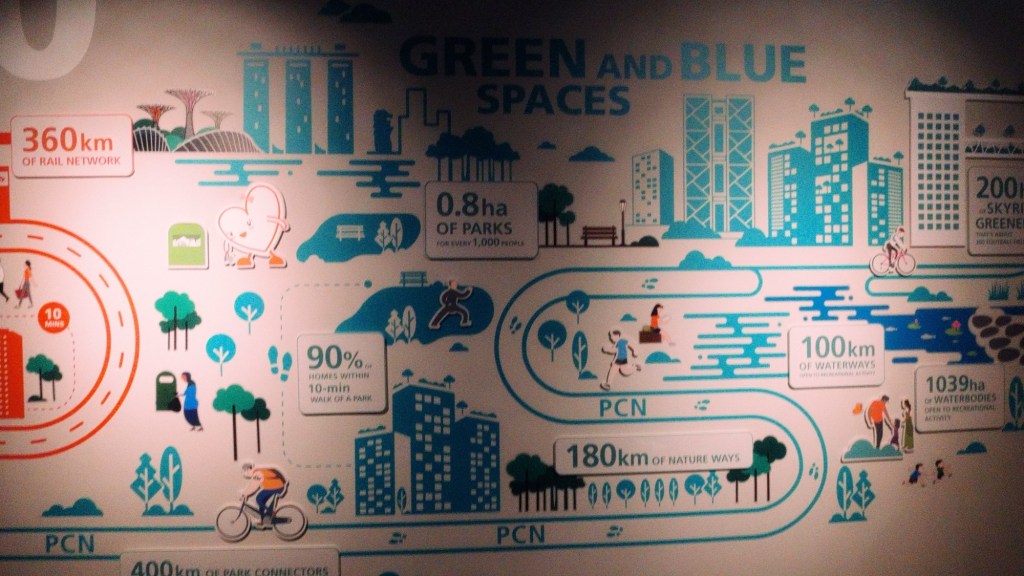
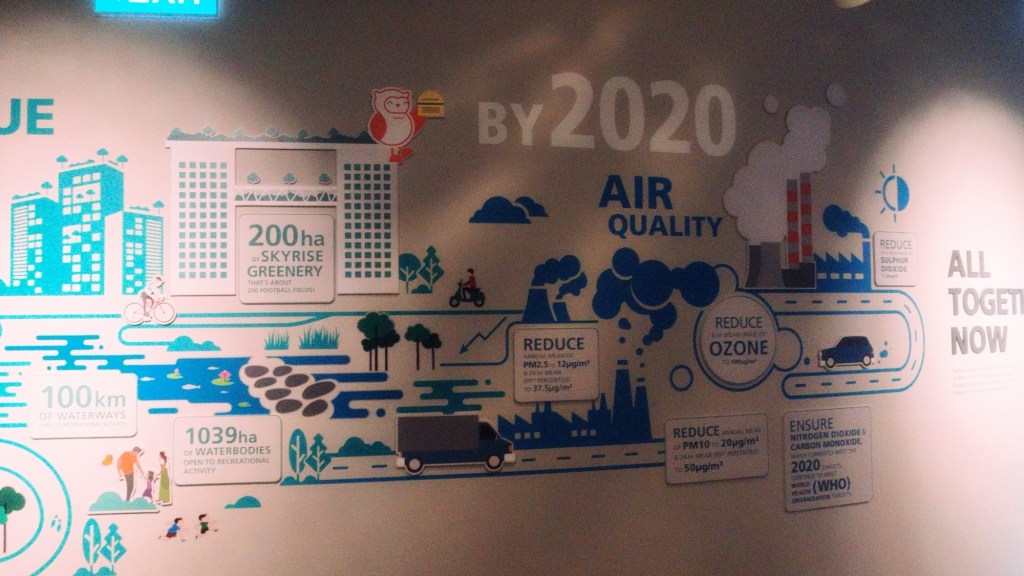
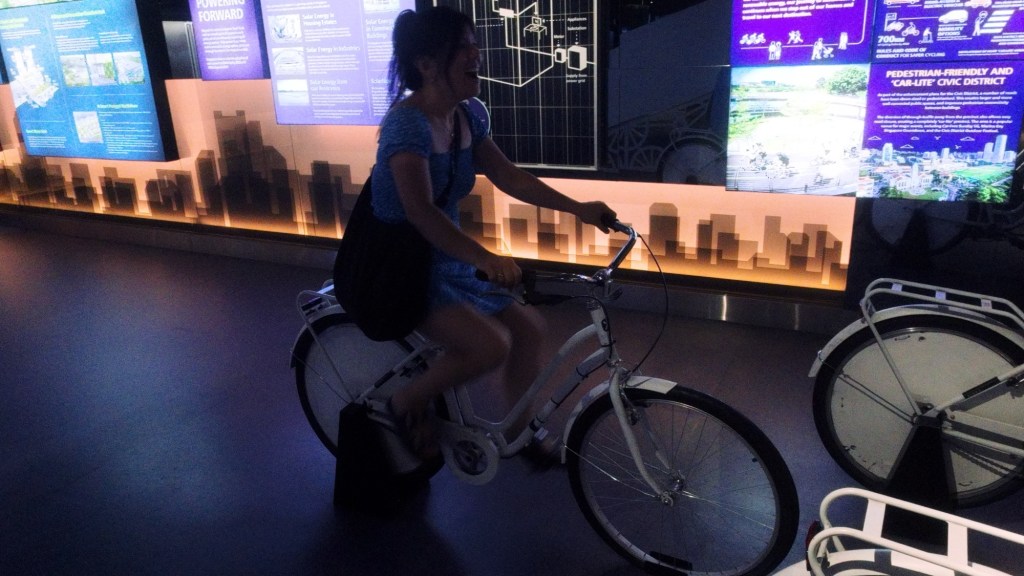
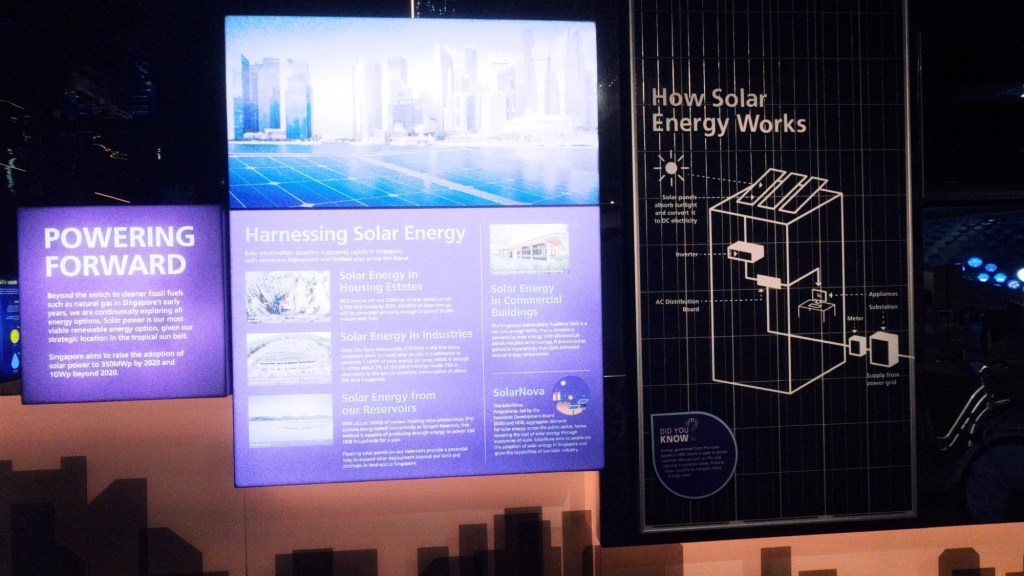
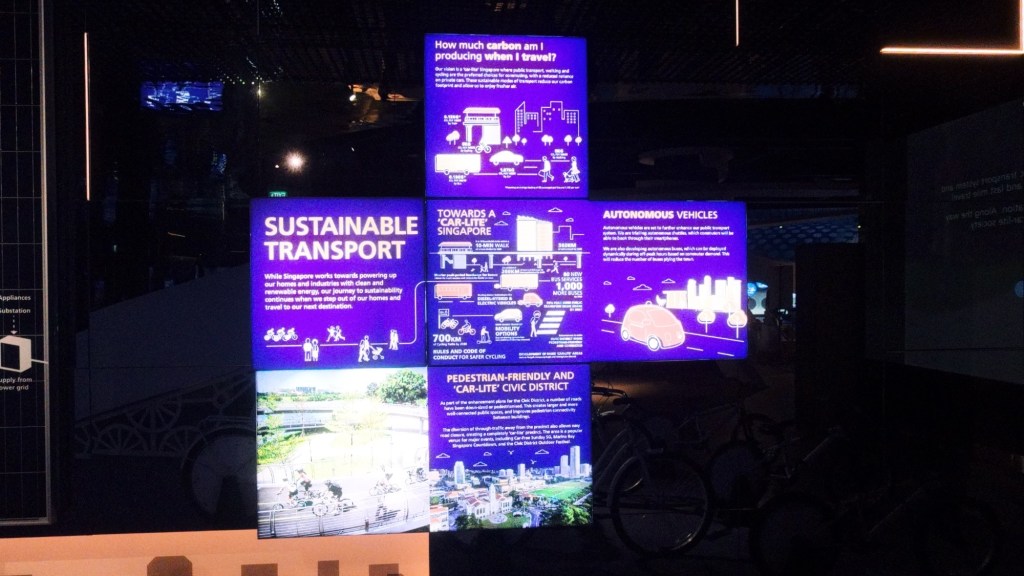
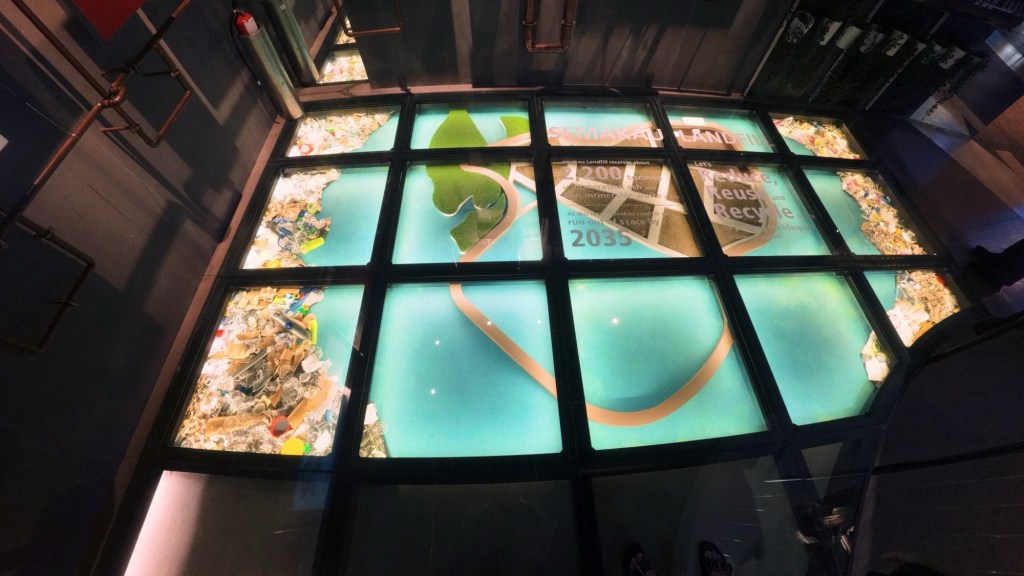
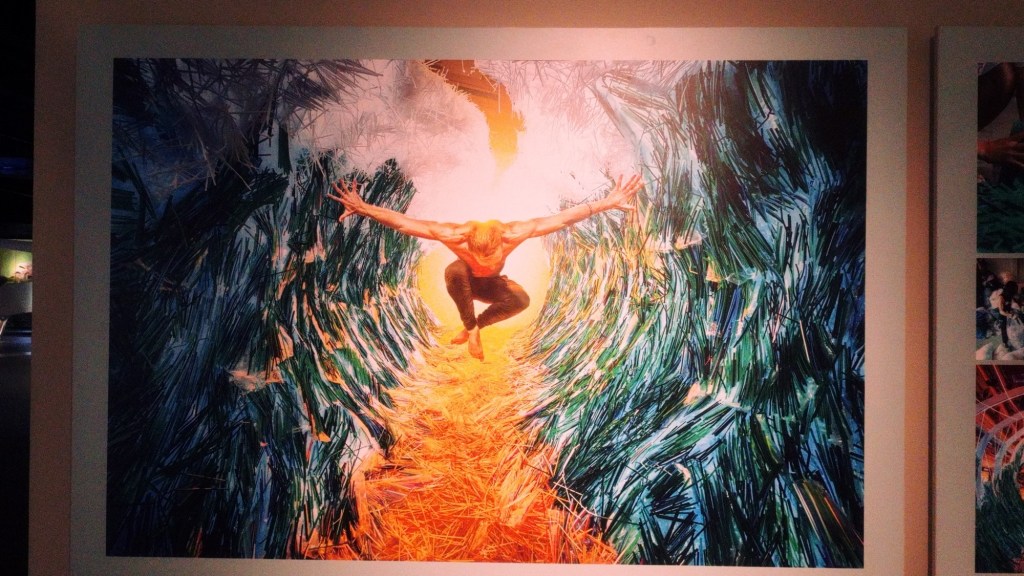
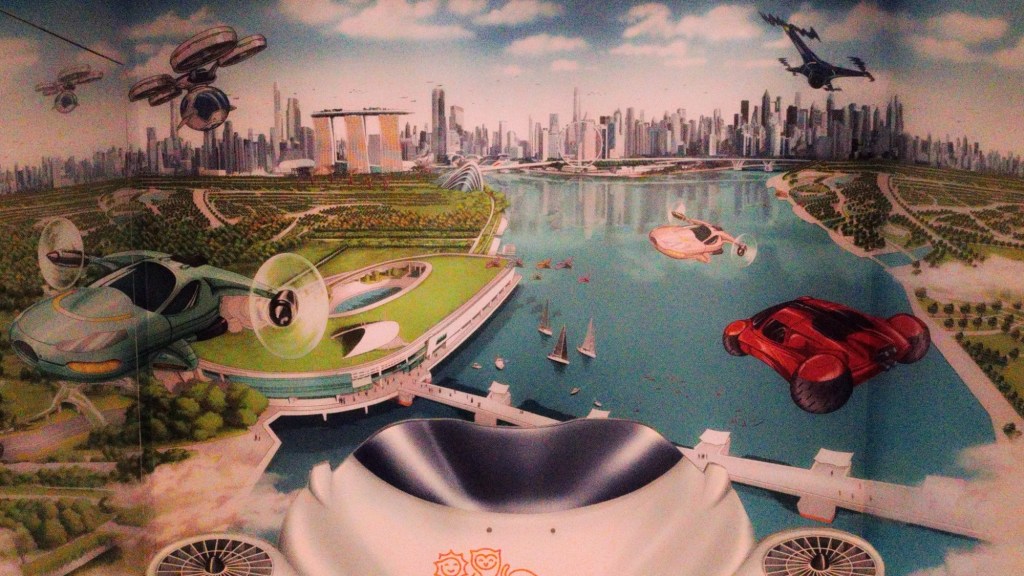
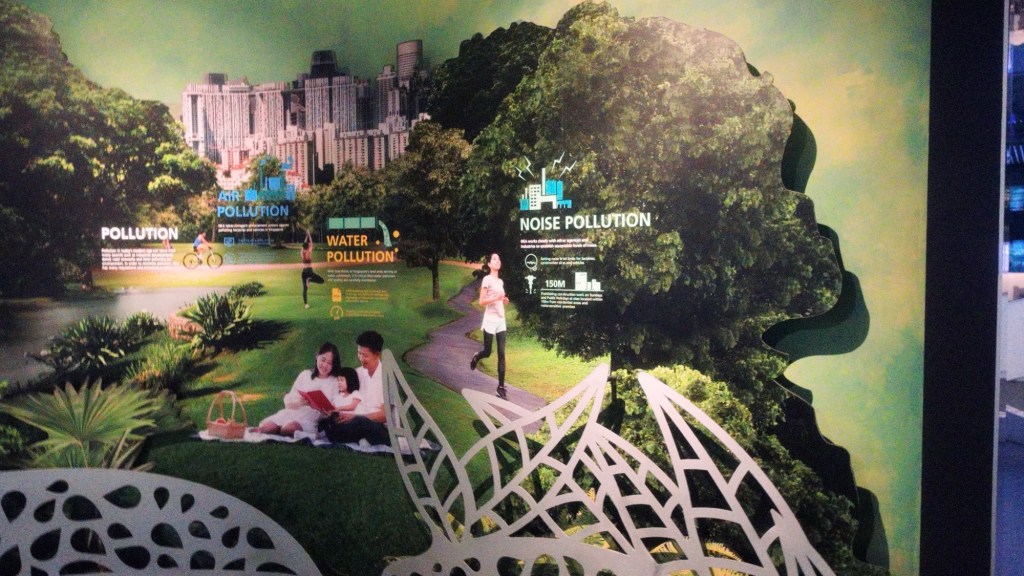
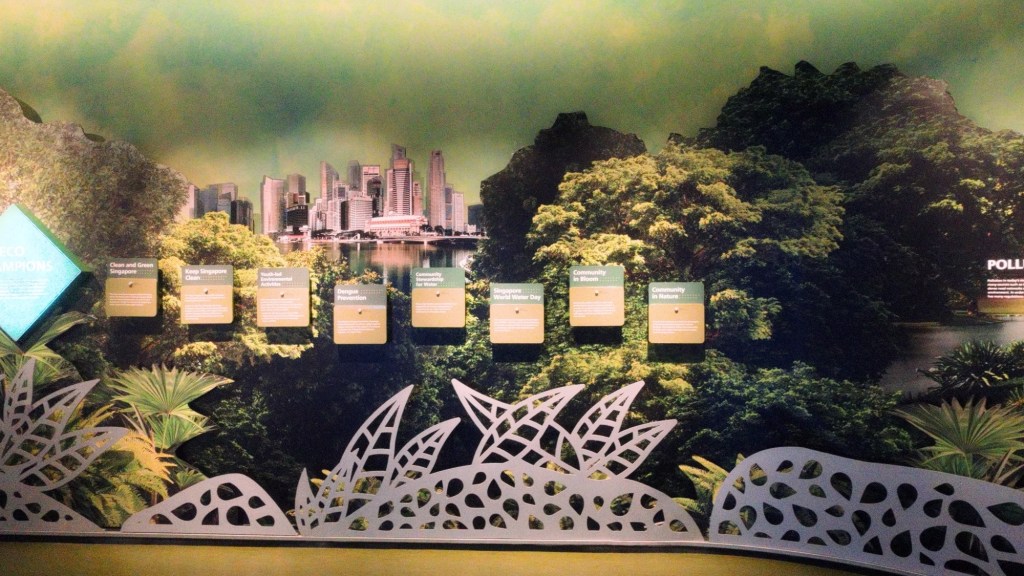
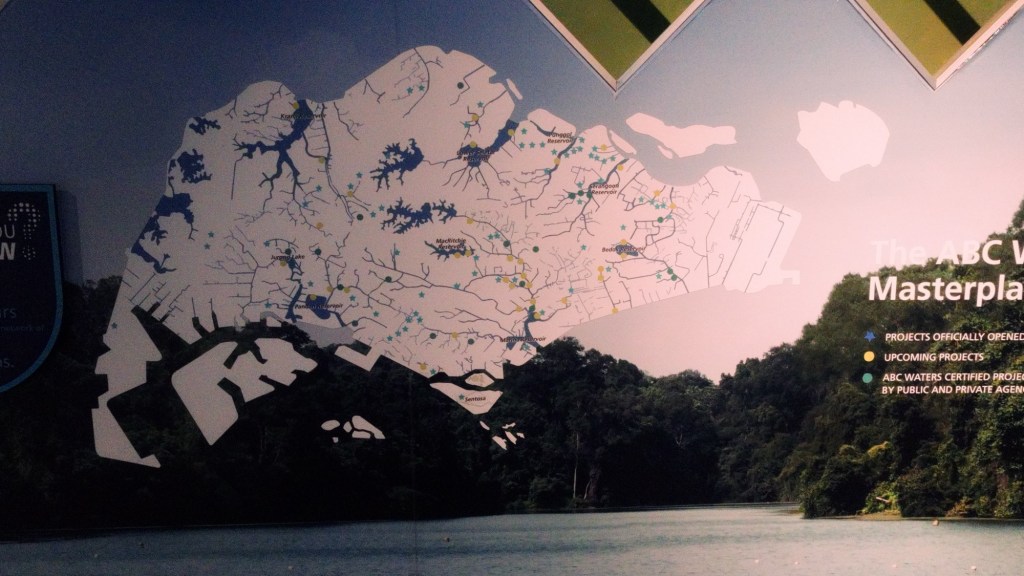
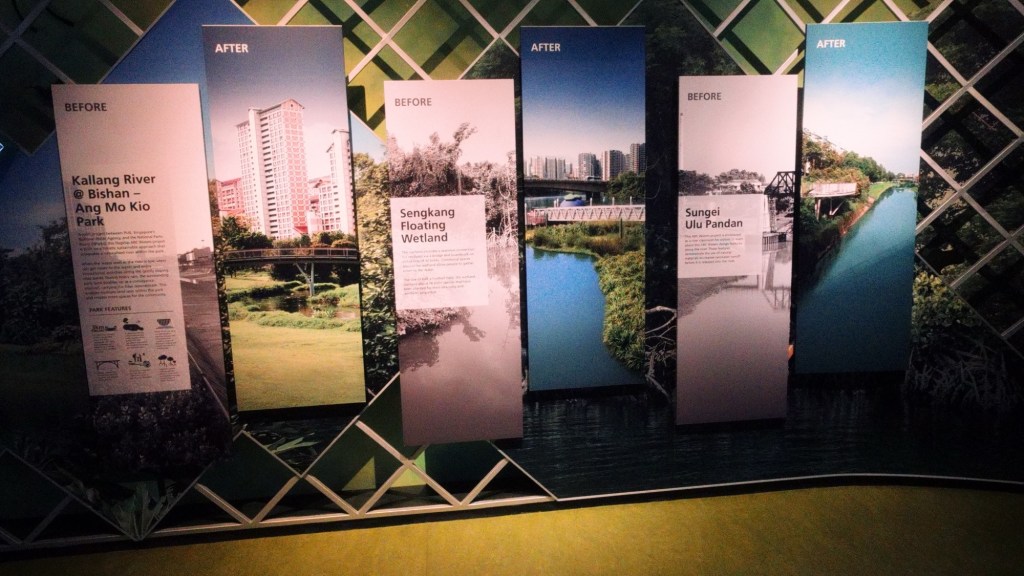
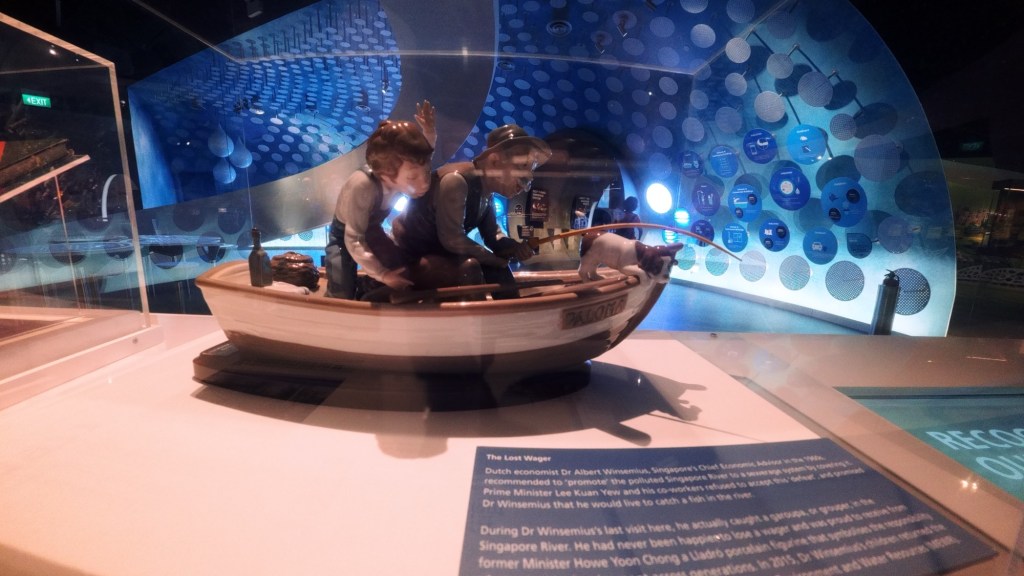
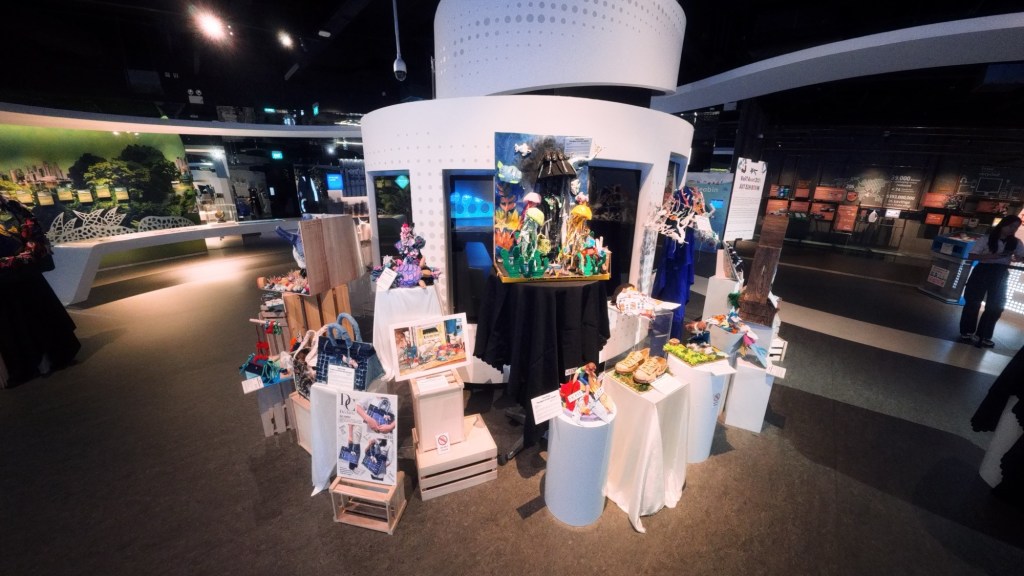
Right next to the pumping station we visited the Sustainable Singapore Gallery. This exhibition is far more than a museum; it is the blueprint for the survival of a modern metropolis and impressively shows the concept of the circular economy.
Here we learned about the strategy of the “Four National Taps”, which makes Singapore independent:
1. Local rainwater (as at the Marina Barrage).
2. Imported water from Malaysia.
3. Desalinated seawater.
4. NEWater: the absolute centrepiece. Through the underground Deep Tunnel Sewerage System (a huge sewage network up to 50 metres below ground), used water is collected in special plants. Through microfiltration, reverse osmosis and intense UV treatment, this wastewater is purified so thoroughly that in the end it is purer and cleaner than ordinary tap water.
When it comes to waste, too, Singapore follows a radical “zero waste” strategy. Since there is no space for conventional landfills, all waste is incinerated to generate electricity (waste-to-energy). Only the remaining ash is shipped to the artificial island of Semakau. And the most amazing thing: this ash island is today a thriving nature paradise with mangroves and coral reefs. Technology and nature exist here in perfect harmony.
Panoramic views, a huge appetite and digital art
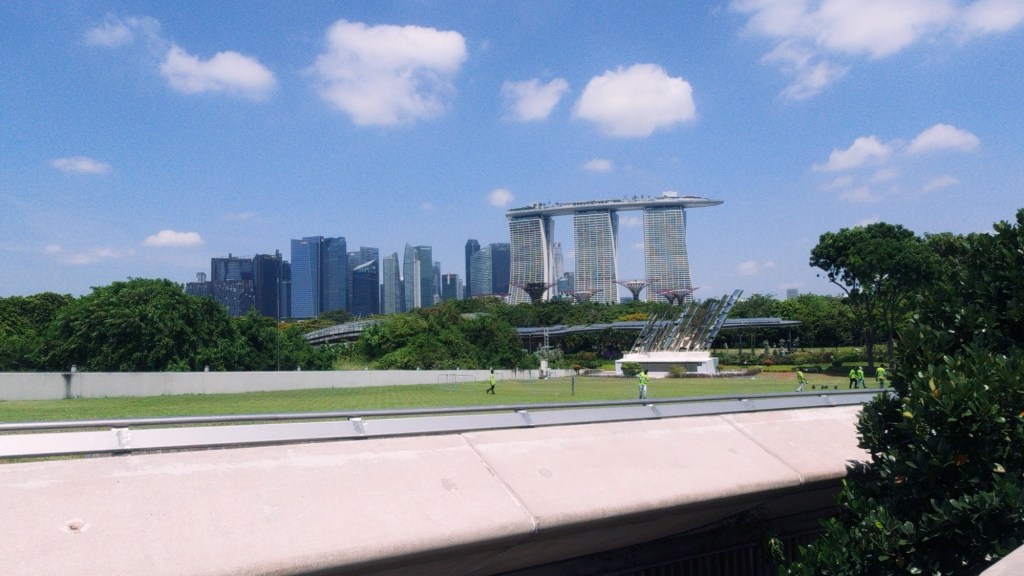
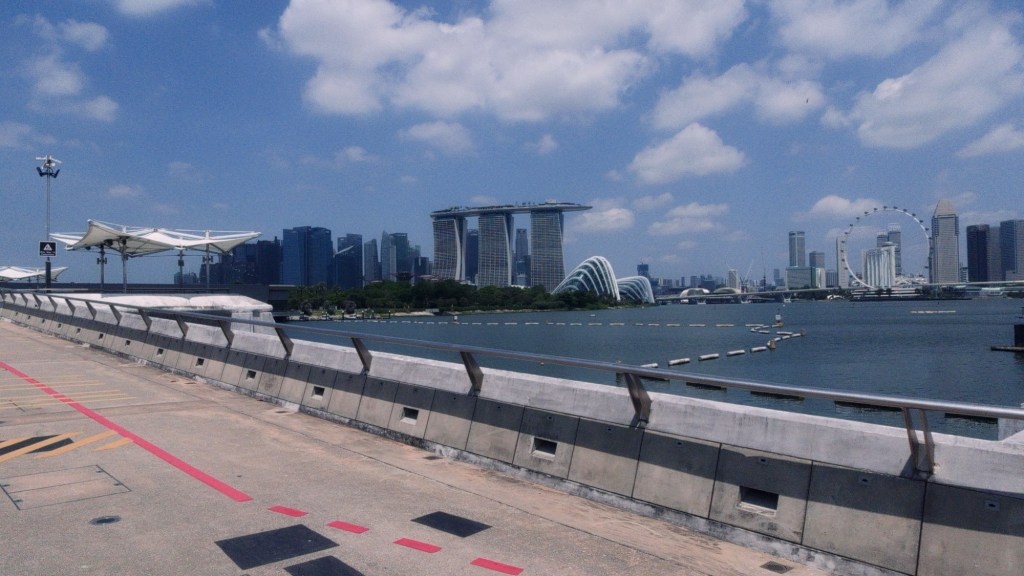
To let all this information sink in, we walked up onto the green roof of the Marina Barrage. The roof is completely covered in grass, cools the building naturally and offers an incomparable panorama. The view of the famous Marina Bay Sands hotel, the Ferris wheel and the skyline is simply wonderful.
After this long walk in the heat, we crossed the 350-metre bridge of the dam and made our way to the food court Satay by the Bay.
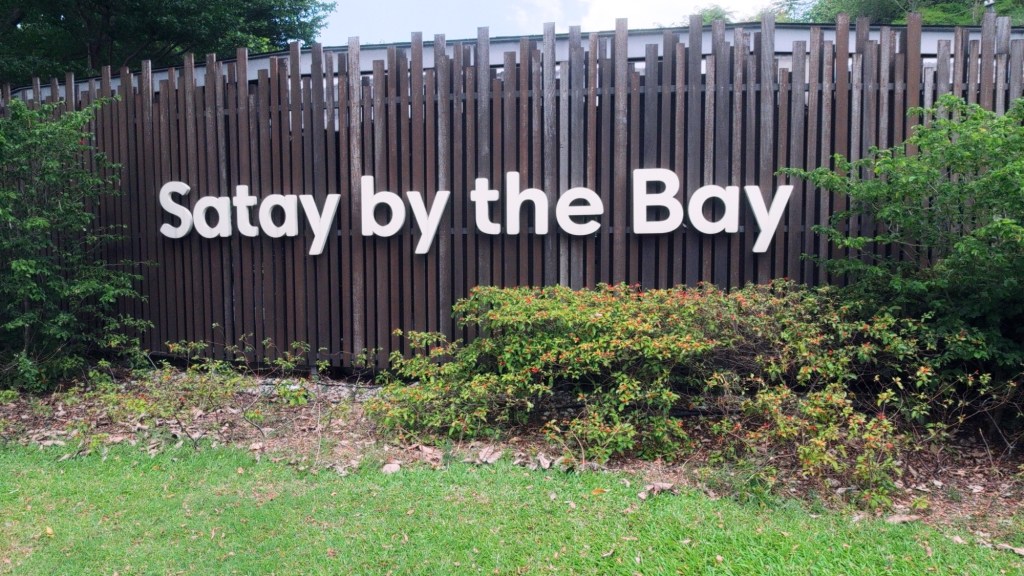
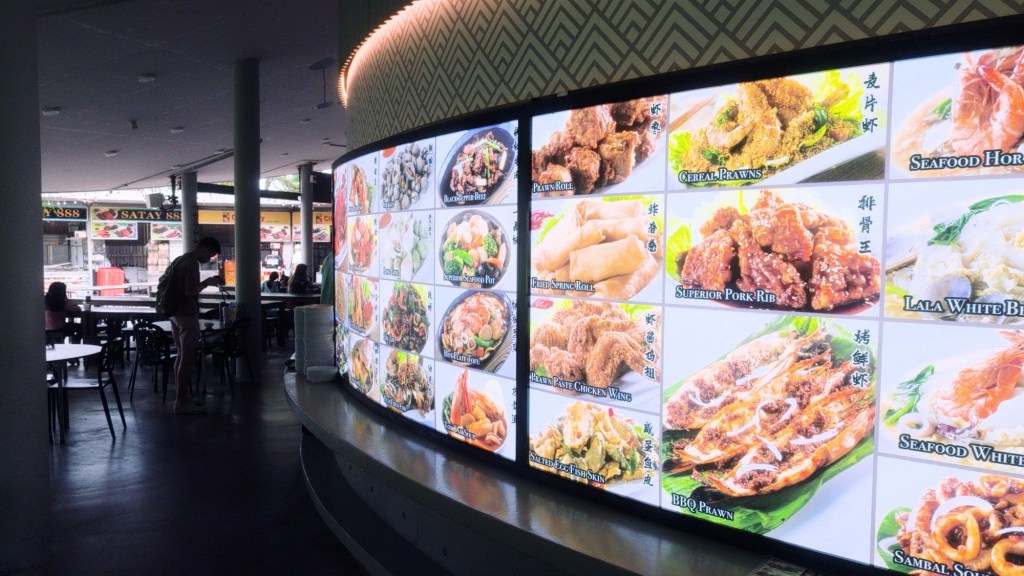
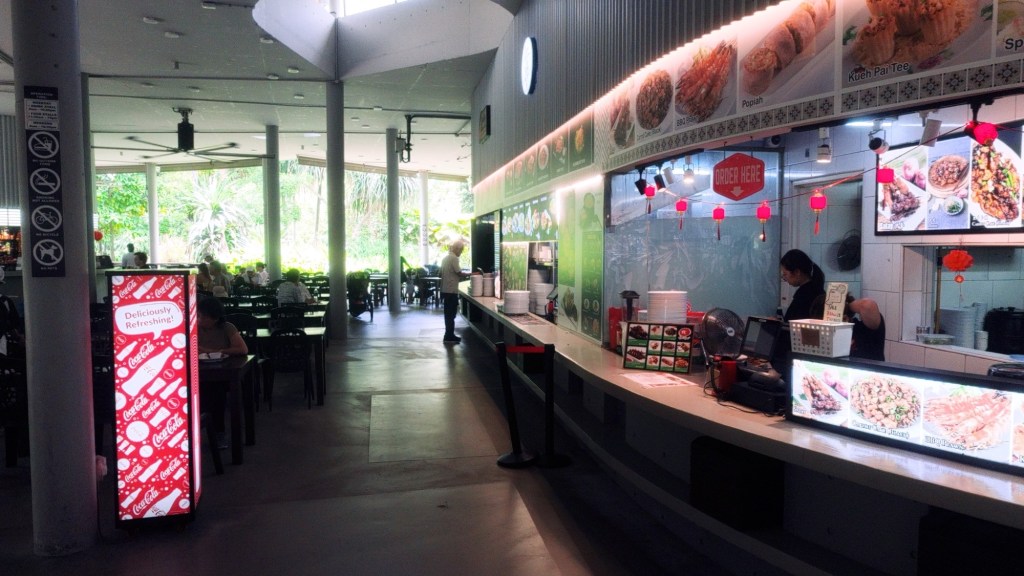
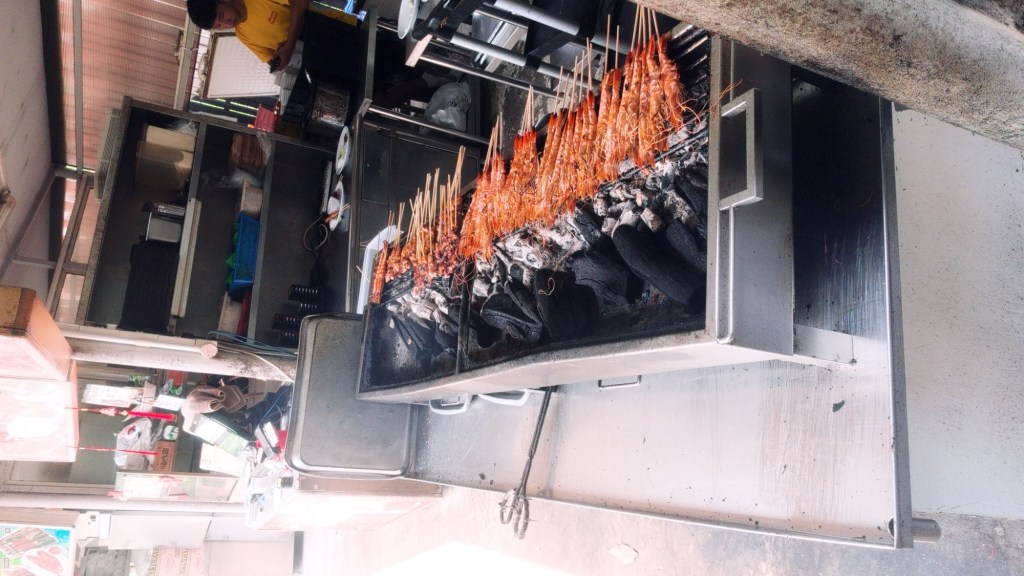
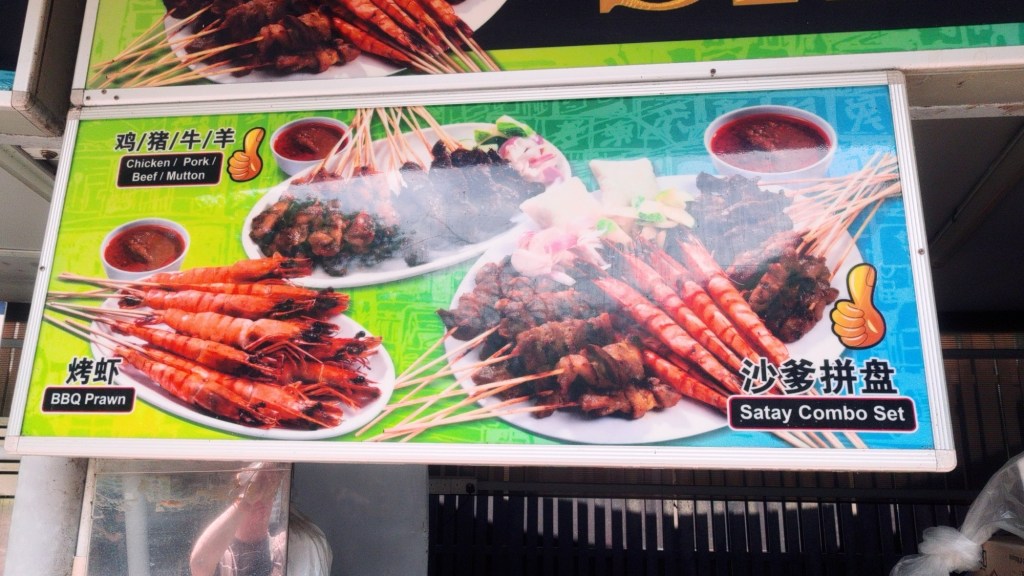
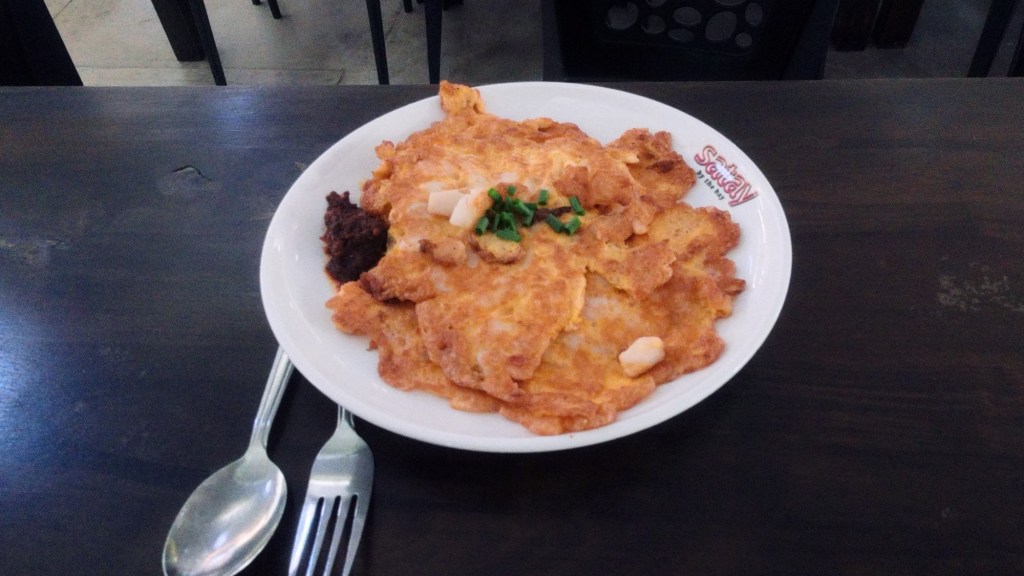
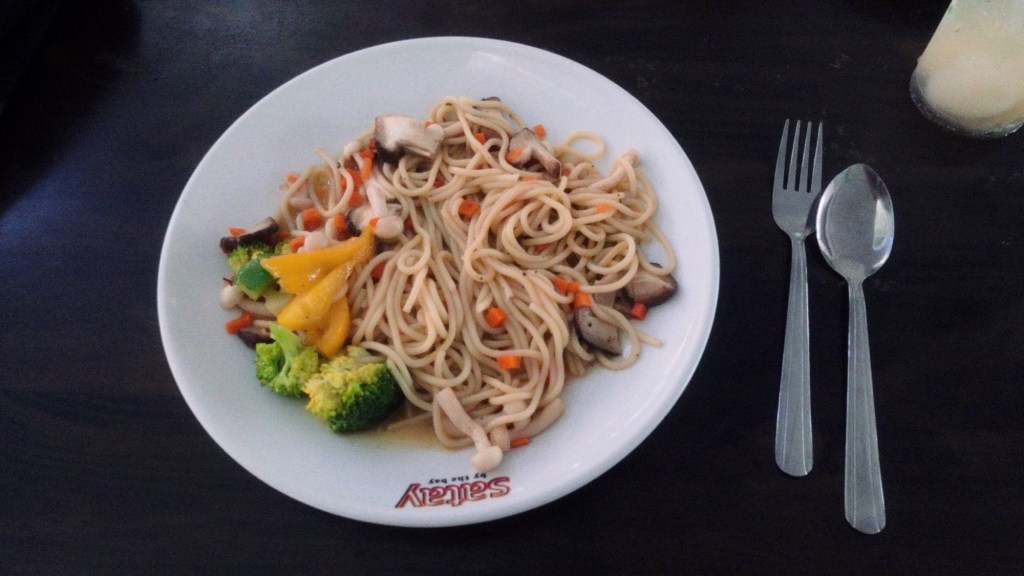
By now we were absolutely starving and enjoyed the local specialities. Afterwards we strolled through the gigantic shopping mall The Shoppes at Marina Bay Sands.
Diving into teamLab Future World
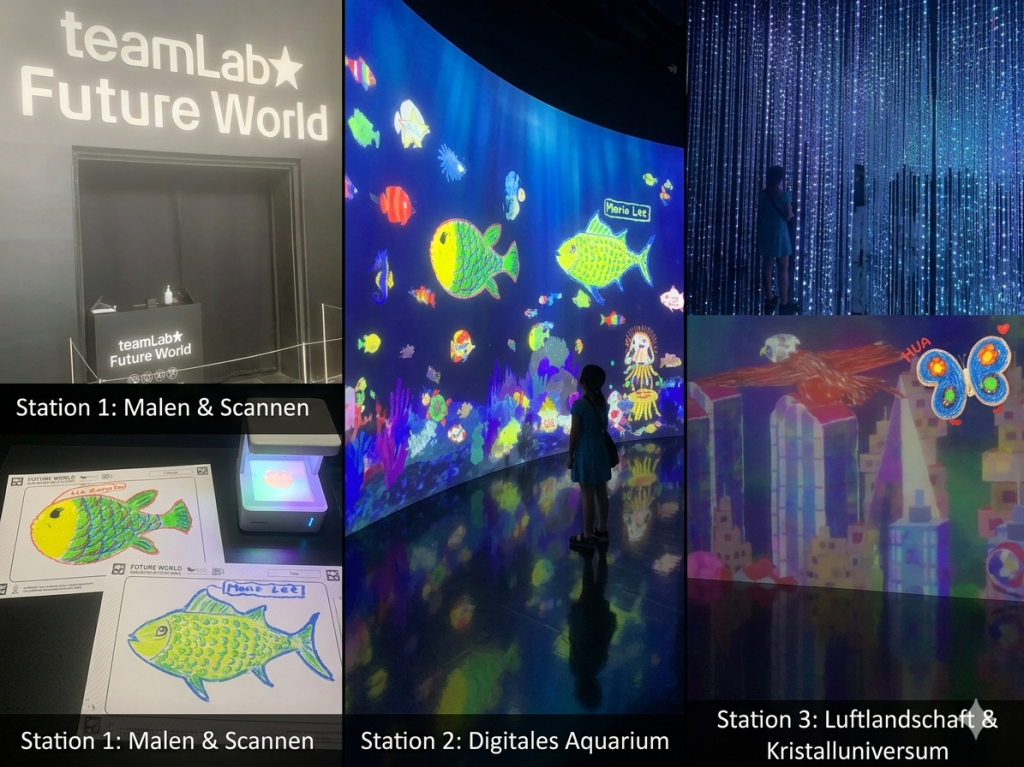
The crowning highlight of the afternoon awaited us at the ArtScience Museum. The interactive exhibition teamLab Future World combines human creativity with state-of-the-art projection technology. Our experience covered three fascinating stations:
1. Colouring and scanning: At a table we coloured in our own sea creatures – mine was a pufferfish, my wife’s a tuna. These drawings were then scanned.
2. The digital aquarium: A few seconds later, our drawn fish came to life on the huge, room-filling screens and swam interactively through a gigantic, glowing ocean.
3. Sky landscapes and the Crystal Universe: In the next area we let a butterfly and a sea eagle glide through a projected sky landscape before diving into the magically sparkling Crystal Universe – an installation of countless LED lights that makes you feel as if you are standing in the middle of outer space.
To round off this intense day, we visited the spectacular glass dome of the Apple Store, which floats like a hemisphere right on the water of Marina Bay.
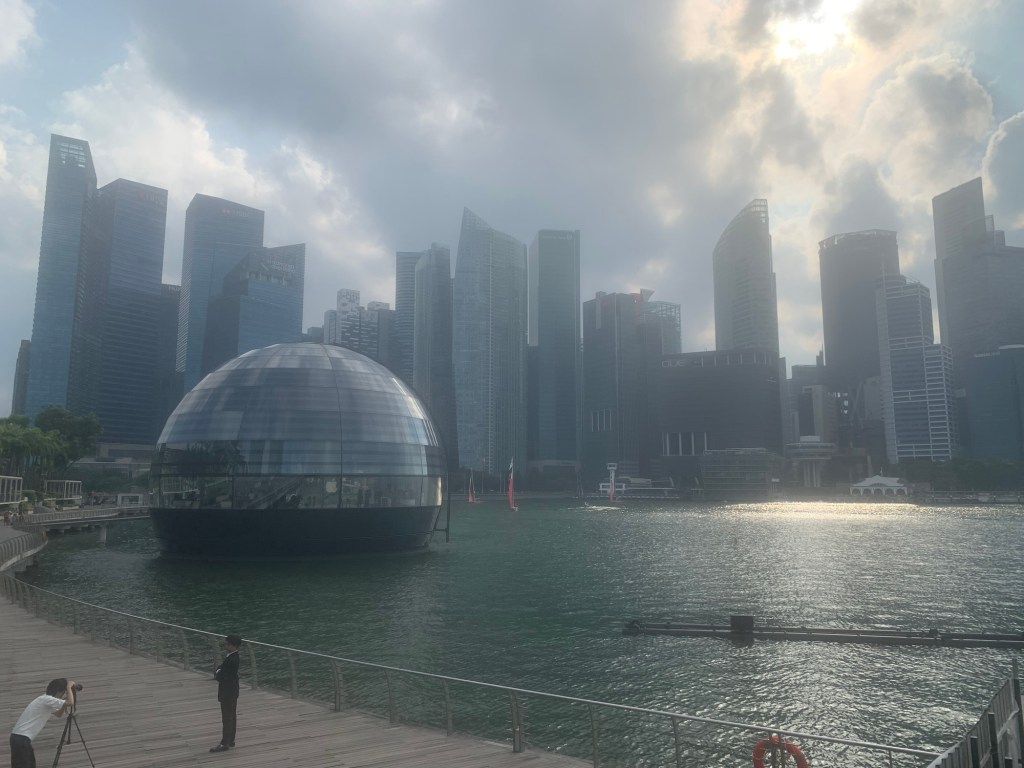
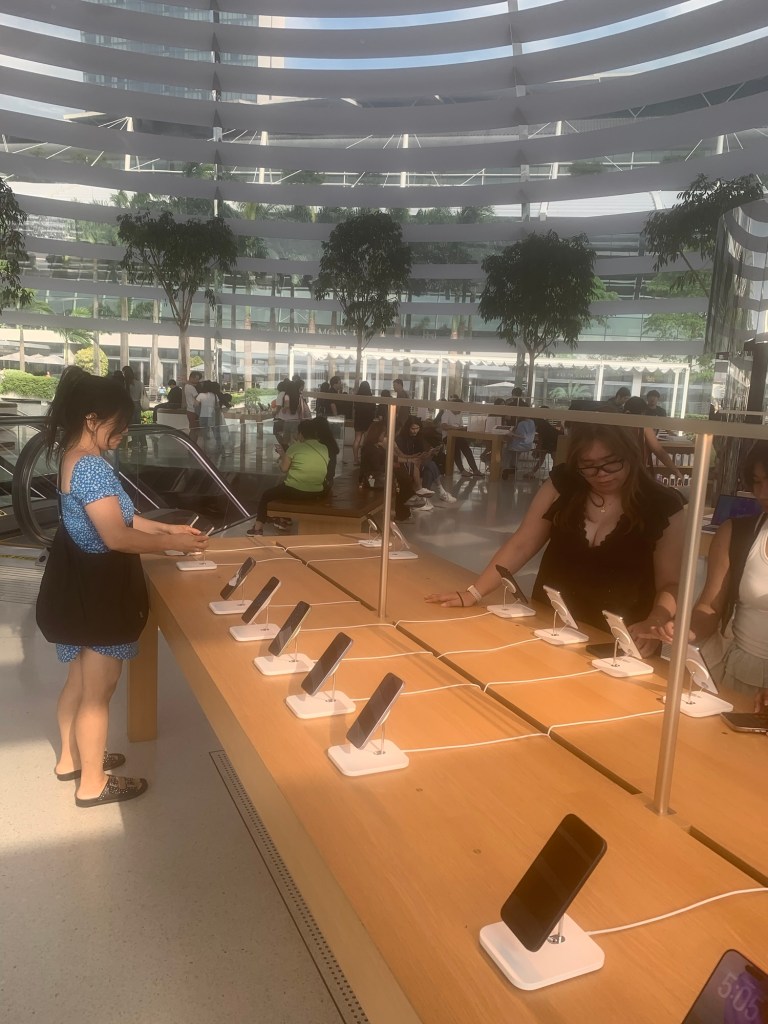
We let the architecture and the soft light sink in. Finally, we ended the evening with a cosy, authentic dinner at a local kopi tiam.
A truly masterful day that let us forget the stress of the past days and showed us how visionary planning keeps a city alive.


Hinterlasse einen Kommentar