🇩🇪 Diesen Beitrag auf Deutsch lesen
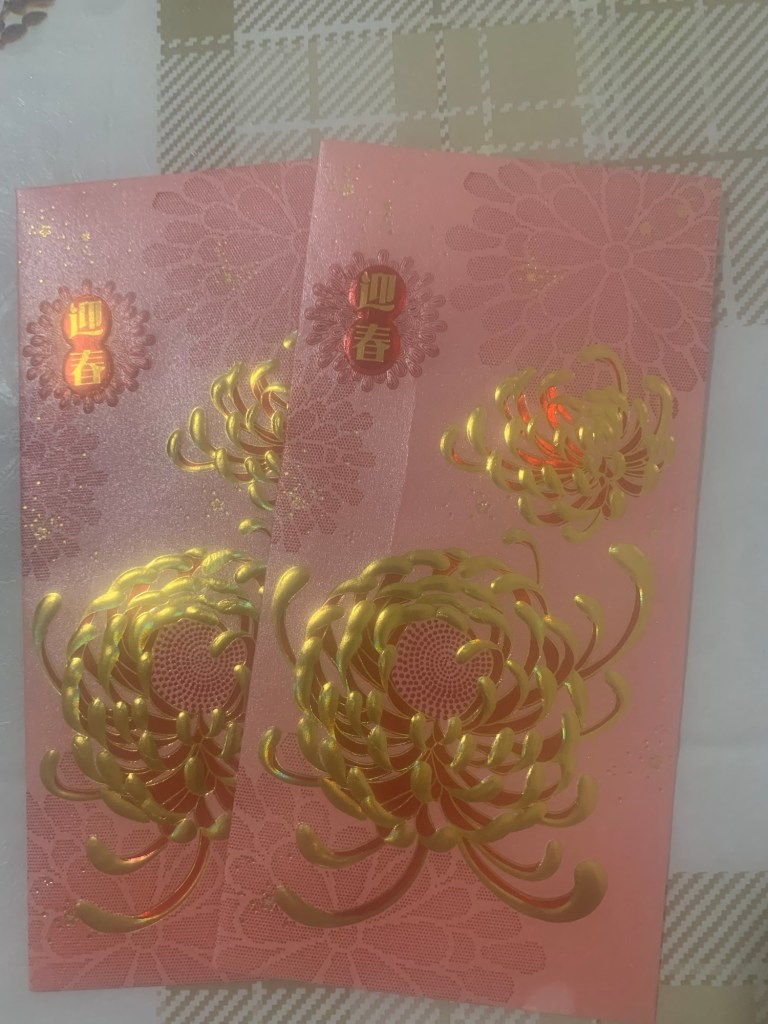
Today is a very special day: we are celebrating Chinese New Year! The day already started with a lovely gesture when my father-in-law gave me the traditional red envelopes, the hongbaos.
A morning full of visits
In the morning, the family of our second cousin came to visit. It is a tradition to exchange oranges or mandarins, and of course we did that. I also gave red envelopes to our cousin’s two sweet little children. The whole family came together, and – as so often – the conversations were about family worries, health and money.
Thanks to the Live Transcribe app, I could follow everything closely this year. In the past it was often boring when the aunts or grandma were telling stories and I didn’t understand anything. Now modern technology allows me to be a real part of the conversations.
Traditional food and good wishes
In the afternoon, the next cousin came with her children (8 and 10 years old), and later my wife’s sister joined us. The highlight was eating together in the Chinese tradition (Lo Hei). Everyone stands around the table, uses their chopsticks to toss the food as high into the air as possible, and shouts wishes for prosperity, luck and wealth.
It was a day full of life, conversation and deep traditions – and thanks to my app, I could experience it more intensely than ever before.
That’s it for today!
The explanations:
Hongbao: why we give red envelopes
Over the coming weeks you will see these bright red envelopes everywhere in Singapore. But why? Behind this tradition is a mix of ancient legends and heartfelt blessings.
1. The power of the colour red
In Chinese culture, red stands for luck, energy and prosperity. The envelope itself is actually more important than the money inside! The red is meant to bring the receiver luck and keep evil spirits away.
2. The legend of „Sui“ (Yāsuì Qián)
The official name for the money in the envelope is Yāsuì Qián (压岁钱), which means „money to suppress Sui“.
- According to legend, there was a demon called Sui who frightened children on New Year’s Eve.
- Parents gave their children eight coins wrapped in red paper to protect them.
- The light of the coins drove the demon away. Today the envelope symbolises this protection for the younger generation.
3. Who gives to whom?
The rules for hongbaos follow a clear social structure:
- Married to unmarried: Usually, married couples give envelopes to children, younger siblings and unmarried relatives.
- Children to parents: As a sign of respect and gratitude, adult children often give their parents a hongbao too.
- Employers to employees: This counts as a bonus and a wish for a successful business year (Sheng yi xing long).
4. The „golden rules“
- Even numbers: Amounts should always be even – but avoid the number 4, which brings bad luck. 8 is the luckiest number because it stands for wealth.
- New banknotes: You always use fresh, crisp notes. This symbolises a clean new beginning.
- With both hands: A hongbao is always given and received with both hands – just like at Lo Hei, where everyone works together for good luck.
What is Lo Hei?
Literally translated from Cantonese, Lo Hei means „to toss up“. It is a colourful salad of finely sliced vegetables, raw fish, different sauces and crunchy toppings. Each ingredient stands for a particular wish for the new year.
How the ritual works
The special thing is not the food itself, but how it is prepared. The whole family – like our group of eight – stands around the big plate with chopsticks.
- Preparation: The ingredients are added one after another, and with each one a specific wish for good luck is called out.
- The toss: On a signal, everyone at the table tosses the ingredients as high into the air as possible with their chopsticks.
- The chaos: Everyone shouts loudly – most often you hear a thundering „Huat Ah!“.
- The rule: The higher you toss and the more „chaos“ lands on the table, the more luck and wealth you will have in the new year.








Hinterlasse einen Kommentar