
In German, the old word “taubstumm” means “deaf and mute”. Many deaf people find it hurtful, because we are not mute: we have a voice and a full language, sign language. Here are situations from my own life in which this word was used about me.
Case 1: At the doctor
After the doctor’s assistant filled in my patient record and added the note “deaf-mute”, I asked myself what exactly that was supposed to mean. Had he not learned how to treat people with hearing loss appropriately? Was this not taught at university or during training? Are there no guidelines for dealing with people who cannot hear or who have difficulty speaking? Was he looking down on me, or was he trying to fall back on silent communication because he does not know sign language? Or am I too stupid?
Case 2: In traffic
As a driver with hearing loss, I was driving perfectly in line with the traffic rules. Suddenly there was an accident, because the other driver ignored my right of way. When we tried to communicate, he noticed that I could not hear. The police were called and wrote a report. I called an interpreter, who needed some time to arrive. The other driver told the police that I was “deaf-mute”. I wonder why the discussion was not about the right of way or the traffic situation, and why only the word “deaf-mute” was picked out. The police seemed quick to believe that I had done something wrong, only because of that word. It seems the other driver tried to shift the blame onto me because he is a coward himself. Or maybe the police never learned to respect people with different needs. Is “deaf-mute” a reason to become enemies?
Case 3: At work
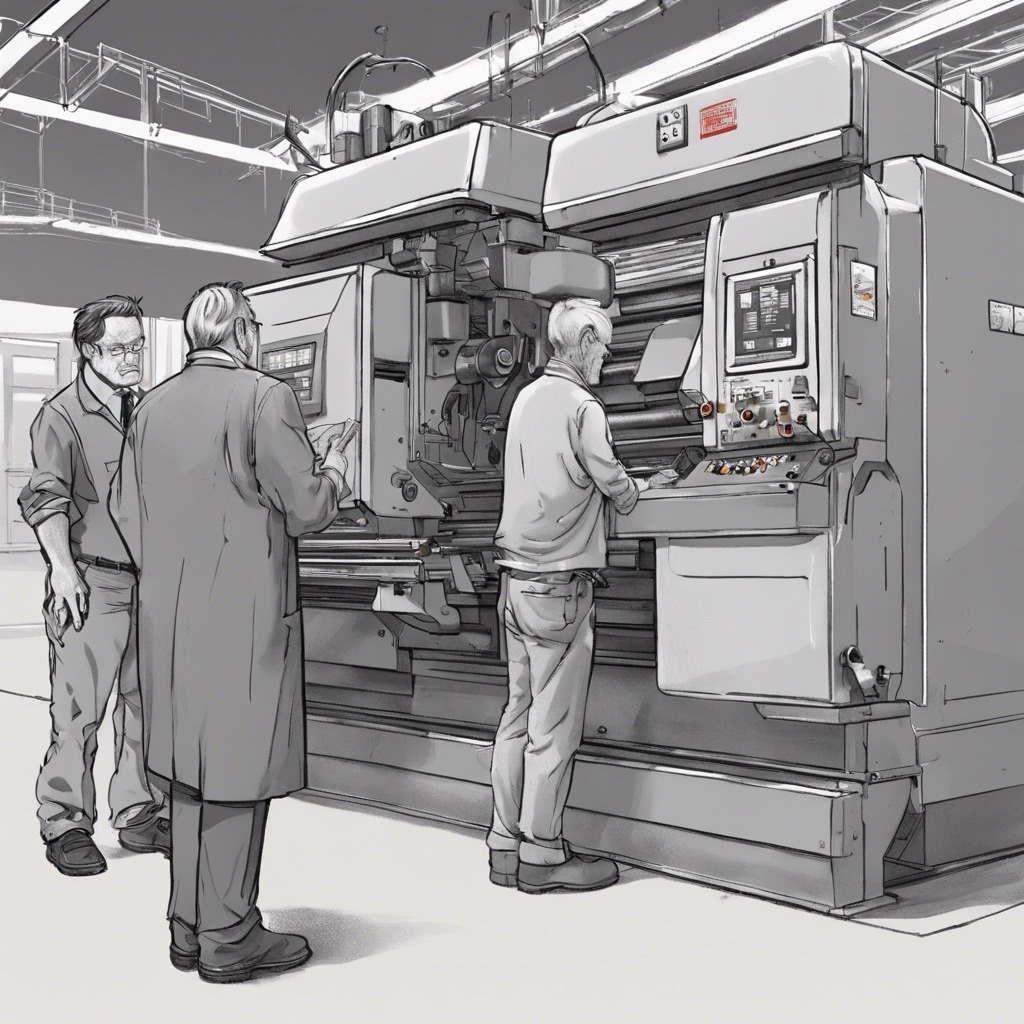
For many years I have mainly worked on a press brake and gained a lot of experience. With more than 35 years of experience, I can solve even complex tasks. Recently my employer came by with a visitor to show him the different machines. While doing so, he described me as “deaf-mute”. I ask myself what he meant by that. Does he feel superior and see me as an inferior worker, or does he imagine I am only a low-paid worker? Does he have no respect for my work, which is just as good as that of my hearing colleagues? Or is he simply unable to communicate with me? I should add that I am very good at lip-reading.
Case 4: At a public office
In 2008 I moved to Bavaria because I had found a new love, on a large farm. Two years later I moved to Passau with my ex-partner, because I am more of a city person and Passau had a lot to discover, especially Bavarian culture, which fascinated me. When we found a spacious flat in Passau, we realised we only needed one car, although we had two before. Parking is hard to find in Passau. So we decided to sell one car and transfer the other into my name. That way we could halve the car tax and get a disability travel pass for my ex-partner. Everything went smoothly.
Then we received a letter from the office asking us to come back. When we entered the office to talk about the change, we did not know what to expect. The officer responsible for disability matters started talking about the documents and mentioned there was a mistake. I explained that we needed an interpreter, but he did not seem interested and kept reading from the documents. I kept objecting, because we simply did not understand what he was saying. Finally I asked him to write down what he was saying, but he refused. We ended up arguing, because I felt he should not behave like that. He seemed to think that because I use sign language I was hot-tempered, and he threw me out of the office. My ex-partner tried to talk to him alone, and in the end everything was sorted out. That is just how things go in Bavaria…
Was he right? Or is this discrimination? Is the word “deaf-mute” part of it?
Case 5: At the social welfare office
I applied at the social welfare office for support as a person with a severe disability, to receive aids and funding for remote interpreting and other things. For this application I contacted Mr X. An interpreter was also there and translated between Mr X and me. Mr X wrote down everything I needed. After that, the matter was settled for the time being. But six months later, Mr X still had not contacted me. I complained to him, because I wanted the support to start, but he simply ignored me. That made me very angry. He then wrote the following: “I know that deaf people live in their own closed universe, which makes things difficult with the rest of the world. Reality outside this universe is often different from what deaf people imagine, which leads to problems and unjustified accusations.”
What does he mean by that? Is the word “deaf-mute” part of this too?
Case 6: In everyday life
There are many situations in which people use the word “deaf-mute” again and again. Excuse me, but that is not what they meant to say. Instead, I was labelled as someone you cannot talk to, or someone unimportant. I have probably experienced the same thing a thousand times in my life. In my thoughts I sometimes want to hit someone on the head with my fist, just so I never have to hear the word “deaf-mute” again. Or should I rather say “thank you”?
Case 7: At the ear specialist in Passau
The immigration office required my wife to attend an integration course. I thought it would be easy. But the language school needed a residence permit and a disability card. So we went to an ear, nose and throat (ENT) practice in Passau. At the reception I could not talk to the assistant, because there was no privacy. So I wrote down what we needed. The assistant took my wife into the audiology room for a hearing test. The assistant could not communicate with her, so she came to get me. I translated for my wife what the assistant said. I did not understand everything, but I knew what she had to do with the buttons. What surprised me was that there were four assistants in one room. That was too much for my wife, but I thought it would be fine.
After half an hour I received the documents. They stated that I (the companion, who is “deaf-mute”) and my wife were hard of hearing. I explained that this was wrong. Why was I listed as a “deaf-mute companion”, and why was she listed as hard of hearing? I suspect that because of my wife’s Asian background, the assistants assumed she did not understand German and spoke English instead. I objected and said that these documents were wrong. The assistant threatened to call the police. So we went to a hearing aid specialist. She tested my wife again and told me that my wife is deaf and cannot hear even with hearing aids. She was surprised at how the ENT doctor had treated her. Three weeks later we had to see another ENT doctor, but not in Passau, even though there were others there. We chose an ENT doctor in Landshut. There we received the correct documents, and thanks to the doctor in Landshut, my wife could finally start her integration course. I still do not understand why the ENT practice in Passau threatened me with the police, even though their documents were wrong. That is typical for Passau. I keep asking myself whether “deaf-mute” means that I deserve to be treated badly.
Case 8: With the police
At about 5:30 in the morning, I was riding my e-bike from home to the train station, as I did every day on my way to work. On the way, I saw a strange object on the cycle path in the distance. As I came closer, I realised it was a lifeless man lying on the cycle path above a road bridge. I leaned my e-bike against the railing and stopped the next cyclist to ask him to call the police, because a dead man was lying there. The cyclist called the police immediately; I do not know exactly what he said on the phone. About ten minutes later, many police officers and several cars arrived. I was very pale and shocked, because the situation was overwhelming. With shaking hands, I tried to communicate with the officers and write down my statement. I explained that I had been on my way to the station and had found the man like that. They asked whether I had touched him, and I answered “No”. The police and forensic team examined the scene and found that the man had taken his own life by jumping from the bridge. Communication between the police and me was very difficult. I tried to make my statement clear with gestures and a written summary. It was not an easy situation.
Case 9: Exploitation at work
When close friends told me how one man described his job, I became sad. On some days he had to work 16 hours in a kitchen with very few breaks. His pay was very low and there were no extra payments. Whenever he asked for holiday, it was simply not possible. He is deaf and has Asian roots. How can a boss treat a disabled kitchen helper so heartlessly? It amazes me that nobody noticed how he should be treated and protected under the law. This company does not belong in our society. This is serious exploitation. I will take action against this company.
Conclusion
The same problems come up again and again: finding the right office, missing interpreters, or the limited opening hours of special advice services for people with hearing loss. This leads to long delays and lost time. Many people still struggle to get a clear answer about what they need to do.
What should change
At the doctor
Reception staff at medical practices should recognise when people need help. When a person with hearing loss comes without an interpreter, the staff should offer pen and paper. For short treatments, pen and paper may be enough. For longer treatments, interpreters should be used to avoid misunderstandings. However, interpreters are often hard to find because they are frequently fully booked. It is important that staff and people with hearing loss find a solution together, instead of offering a superficial treatment and simply writing “deaf-mute” in the file.
With the police
With the police, we want to find shared solutions that protect privacy and allow fast contact. It is also important to keep interpreter contact details on record and to have pen and paper ready for a short conversation. It would help if some police officers had the chance to learn sign language, to make communication easier and avoid misunderstandings.
At public offices
Public offices are often complicated for me. Some staff are friendly, others are cold. They often seem to judge me by my appearance and ignore me. That is why we are looking for a better way of dealing with people with hearing loss. We would like a list of sign language interpreters to be kept, and pen and paper to be available for short meetings. It is important to be friendly, because people with hearing loss usually react quickly to the way officials behave. Offices could also train their own in-house sign language interpreters. We want to avoid unnecessary trips and wasted time. The best way is to reduce misunderstandings and keep bureaucracy to a minimum.
At the social welfare office
It is essential that the social welfare office makes sure people with hearing loss have access to sign language interpreters when they apply for support, so they receive proper explanations even for difficult and complicated questions. Clear guidance is important, so that the needs of these people are taken seriously and the process runs smoothly.
At work
People with hearing loss often work in the same position for many years and do good work. Unfortunately, they often receive neither training nor better working conditions. As a result, they stay in the same position for years with no chance to develop their careers. It is important to know that, in Germany, people with hearing loss can apply for support from the Integration Office or the Employment Agency to receive training and further education. This is especially important when a company uses modern machines that people with hearing loss are not allowed to operate without proper training. It is sad that, despite many years of work, people with hearing loss often receive a poor pension.
This article was first published in German: Ich kann einfach nicht verstehen, was mit dem Begriff „taubstumm“ gemeint ist


Hinterlasse einen Kommentar